

Free written scope consultation - allowances, timeline, and change-order rules on paper before a single trade is scheduled

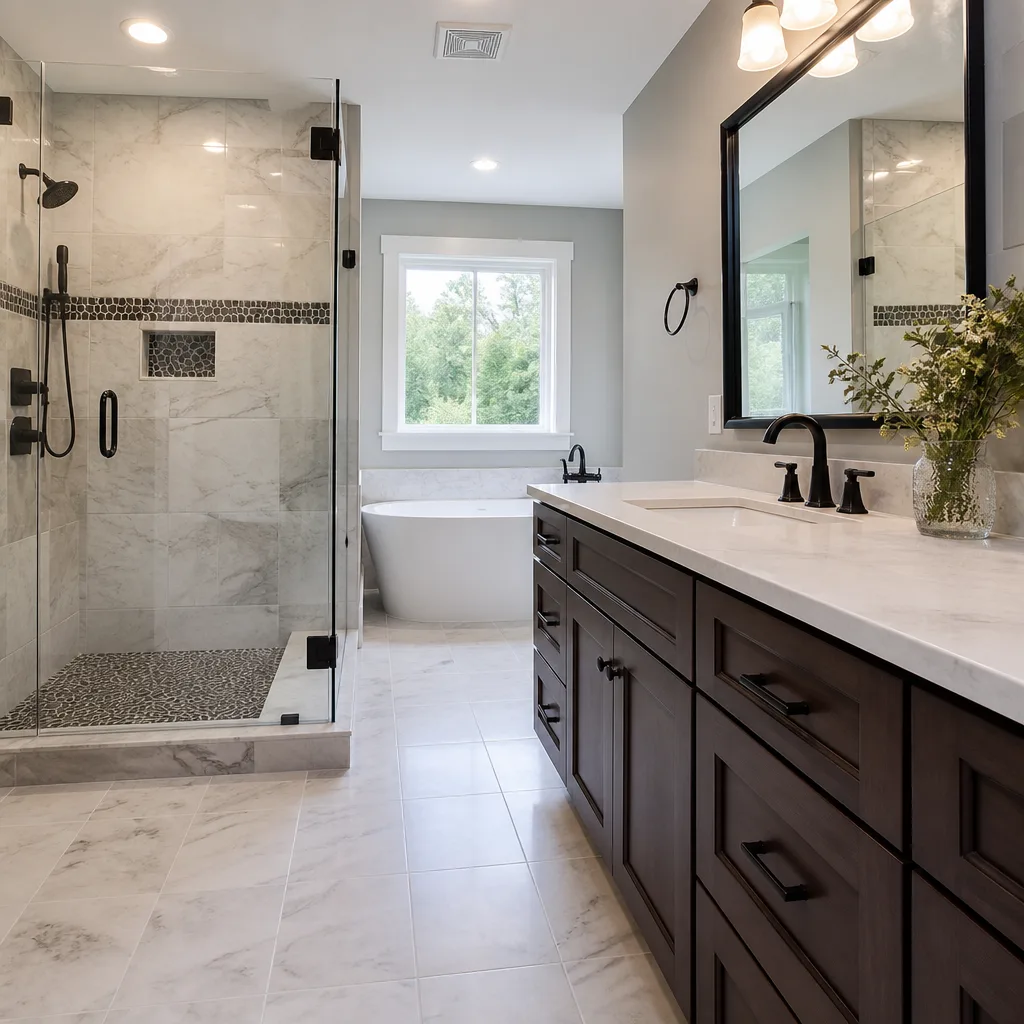





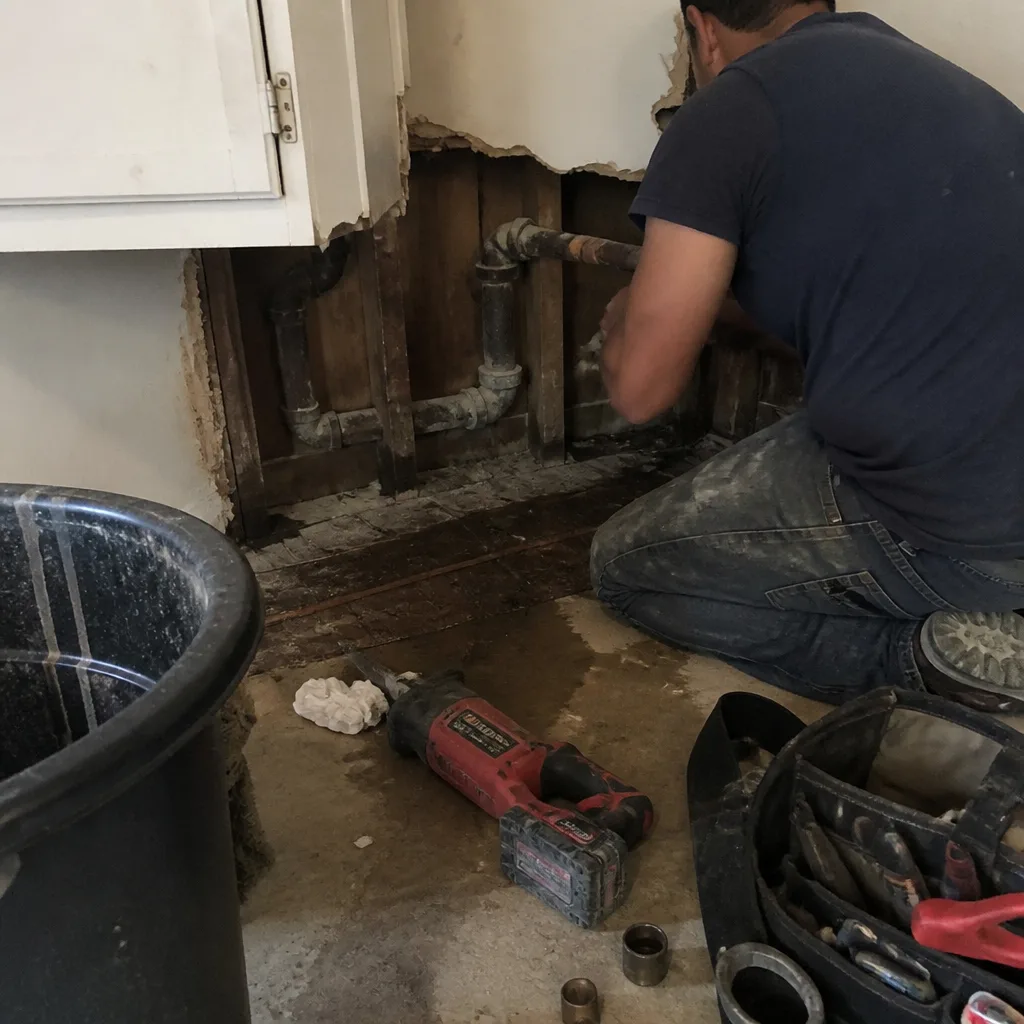 Before
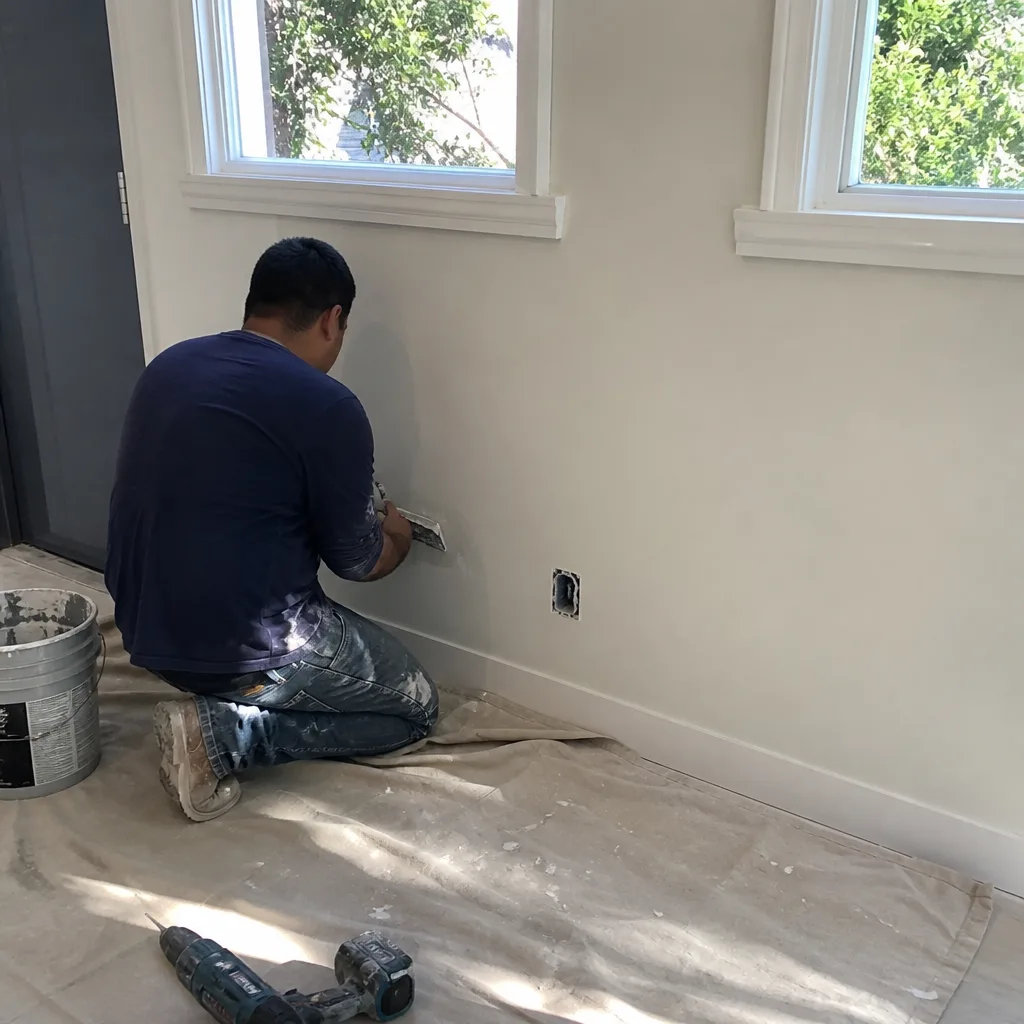 After
After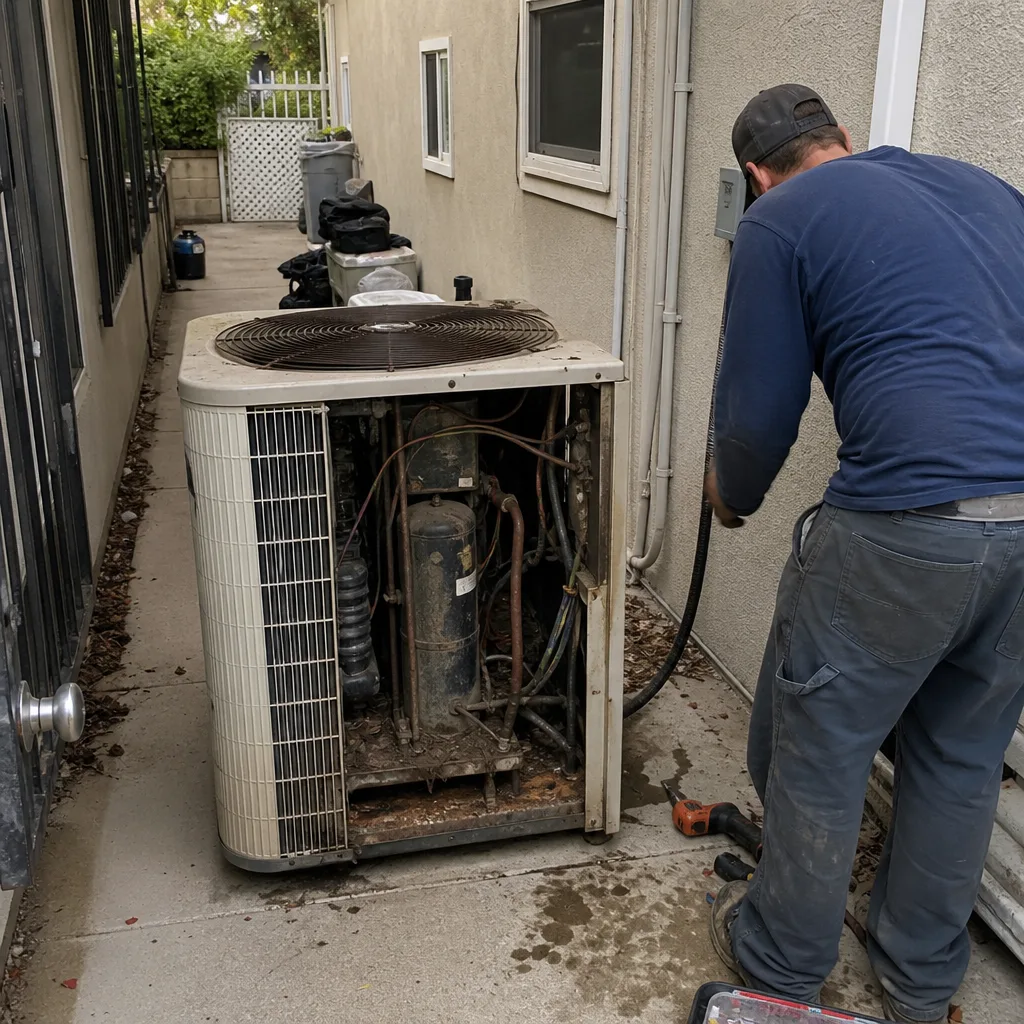 Before
 After
After Before
 After
AfterBathroom Remodeling Stopped Working
When your bathroom remodel stalls, stops making sense, or the results don’t match what you were promised, the cause is almost always one of four things: a failed fixture or plumbing connection, water damage that surfaced after tile was set, ventilation that was never properly addressed, or workmanship that wasn’t completed to a finished standard. Any of these can happen mid-project or after a crew has left the job.
The good news is that all four are diagnosable before anyone opens a wall. What you’re seeing right now – a wet floor, a fixture that won’t seat, grout that’s cracking at the threshold, a fan that hums but doesn’t move air – tells a technician most of what they need to know before they touch a single tile. The sections below walk through each cause in plain terms so you know what you’re looking at.
Why It Happens
1. Plumbing Connections That Weren’t Pressure-Tested Before Tile Went Up
A supply line or drain fitting that was rough-plumbed but never tested under pressure can hold for weeks before the seal fails. By then, tile and backer board are already in place. You’ll know this is the problem if you see water pooling at the base of the vanity, dark staining on the cabinet floor, or soft spots on the subfloor when you step near the toilet. The moisture is real and it’s been sitting longer than it looks.
2. Insufficient or Incorrectly Vented Exhaust Fan
A bathroom exhaust fan that terminates into an attic cavity rather than through the roof cap, or one that’s undersized for the room’s cubic footage, will push humid air somewhere it can’t escape. The result is condensation on the ceiling, peeling paint along the top of the walls, or mold forming in the grout lines within a few months of project completion. If you can run your fan for ten minutes and still feel moisture on the mirror, the ventilation isn’t doing its job.
3. Tile or Grout Failure at the Wet Zone
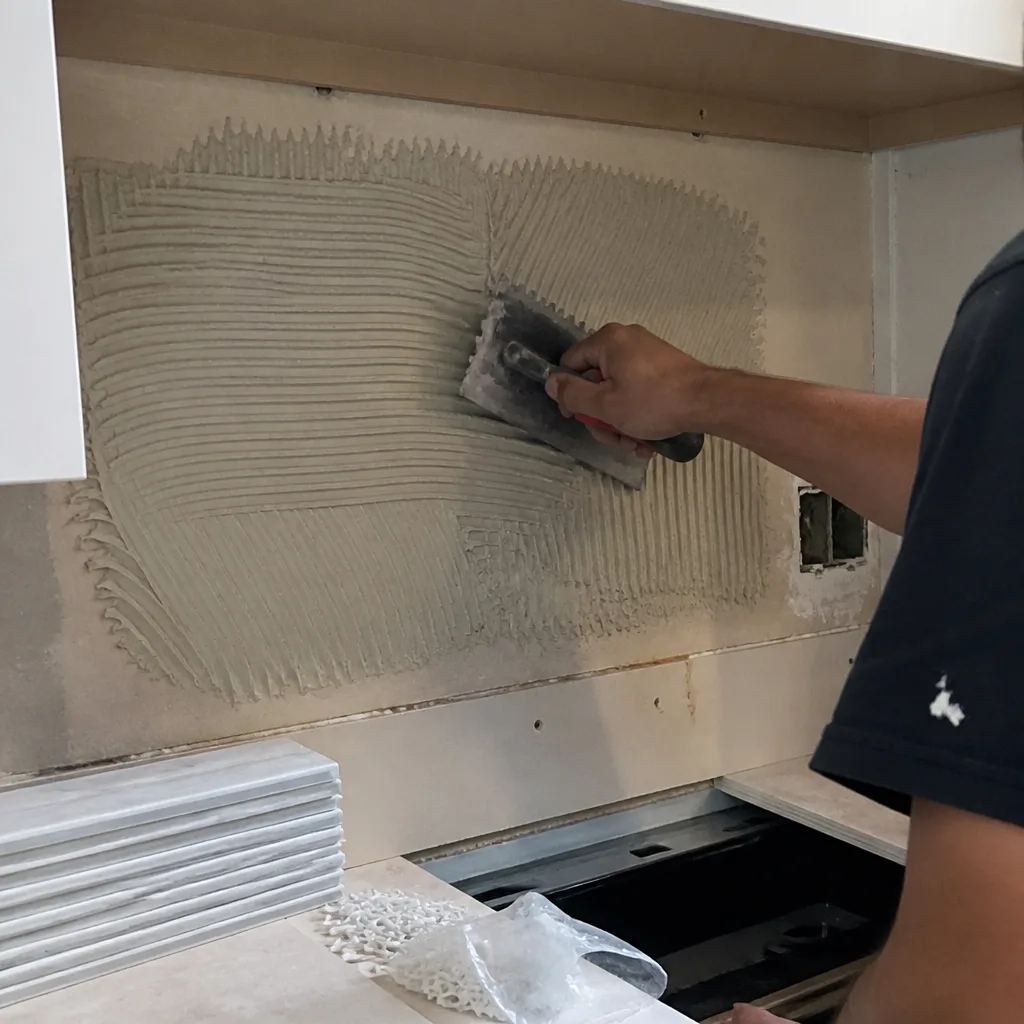
The area where the shower floor meets the wall – called the cove base or the curb transition – is where most tile failures start. If the mortar bed wasn’t sloped correctly (the standard is a quarter-inch drop per foot toward the drain), water sits rather than drains, and grout cracks under the freeze-thaw cycle of daily use. You’ll see this as cracked grout lines at the corners, tiles that sound hollow when you tap them, or caulk lines that have separated from the wall entirely.
4. Fixtures Installed Without the Correct Rough-In Dimensions
A toilet that rocks, a faucet that won’t align with the holes in a new vanity top, or a shower valve that’s recessed too deep or proud of the tile plane – these are all rough-in errors, meaning the plumbing stub-outs were set before anyone confirmed the fixture dimensions. This is one of the most common handoff failures in bathroom remodeling, and it often surfaces only after the tile is set and the homeowner tries to install the final trim pieces.
What to Do Right Now
- Stop using any fixture that’s actively leaking. Turn off the supply valve under the sink or behind the toilet – it’s the oval handle on the wall. Don’t run water through a drain that’s backing up. Standing water under tile will reach the subfloor within 24 to 48 hours.
- Photograph everything before you touch it. Take photos of the wet area, the cracked grout, the misaligned fixture, or whatever you’re seeing – from multiple angles and distances. This documentation matters if there’s a workmanship conversation with whoever did the original work.
- Do not attempt to re-caulk or grout over a wet surface. Sealing moisture in accelerates the damage. Let the area dry with a fan running, then document again.
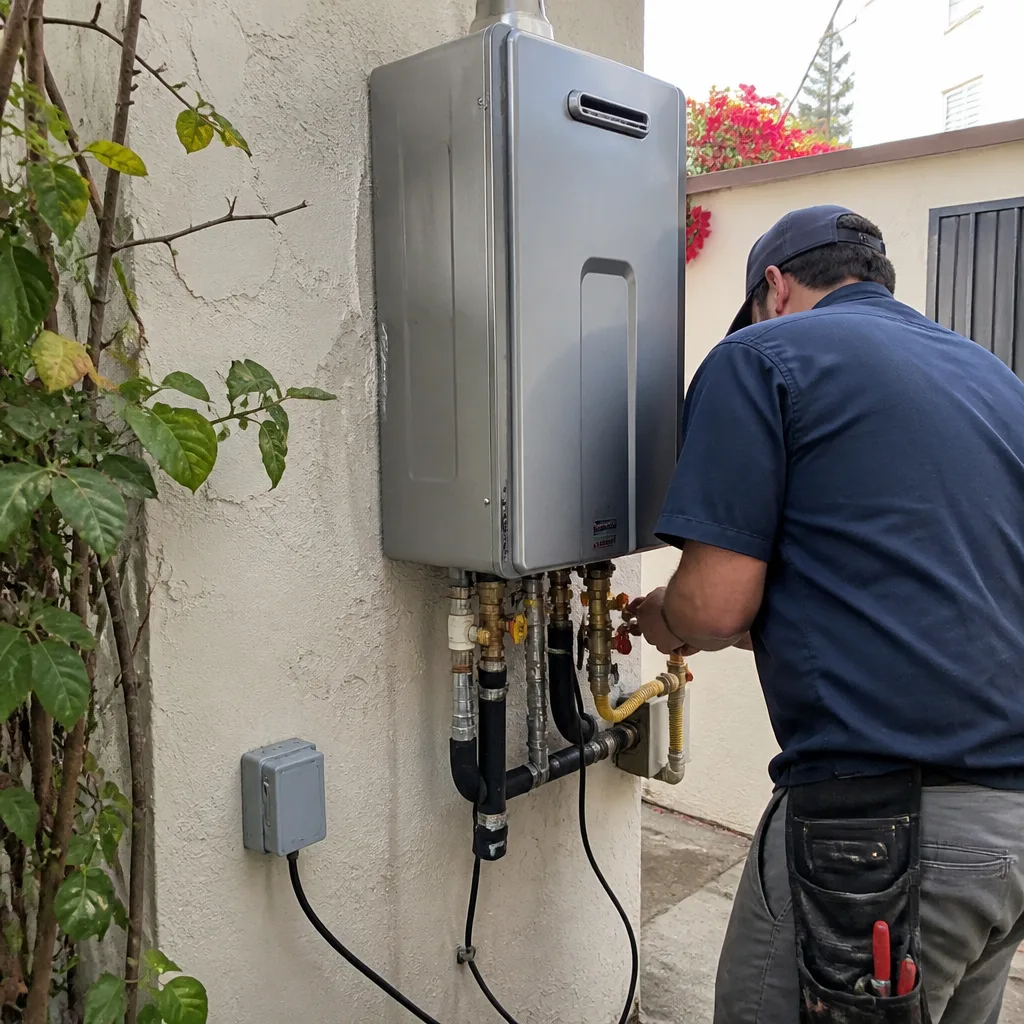
- If you smell gas anywhere near a gas-fired water heater that shares the bathroom’s plumbing wall, leave the room and call your gas utility immediately. Do not troubleshoot that yourself. This is the one item on this list that is not a DIY assessment.
- Note whether the problem appeared during the project, immediately after, or weeks later. The timeline tells a technician whether it’s a workmanship issue, a material failure, or an underlying condition the remodel uncovered. Write it down before you forget.
BeforeAfterHow We Fix It
When your local Rowan Construction Group team arrives, the first thing they do is document what’s there – photos and readings, before anything is moved or opened. That’s not a formality; it’s the baseline that makes everything else honest.
From there, the technician identifies whether the failure is at the surface (grout, caulk, tile) or behind it (mortar bed, backer board, plumbing connection, subfloor). Surface repairs can often be addressed in a single visit. Anything behind the tile – a failed pan liner, a subfloor with water damage, a plumbing fitting that needs to be reset – requires a scope and a written price before work begins. That’s Clause 1 of the Haven Standard, and it applies here the same as it applies to a full remodel.
The service that resolves this is Bathroom Remodeling. Where the scope involves structural elements – a damaged subfloor or a wall that needs to come open – that work is scoped as part of the same written estimate. No surprises, no door upsell. You get a flat price in writing before anyone starts.
The 365-Day Done Right Promise covers the work we do. If it’s not right, we make it right.
Frequently Asked Questions
A plumbing leak behind tile or under a subfloor cannot wait, even if the visible damage looks minor. Water that reaches a subfloor begins to compromise the structural layer within days, and mold growth in a confined cavity can start in under 48 hours in a humid environment. If you’re seeing soft spots, discoloration, or smell anything musty, treat it as urgent. Call (470) 298-9650 and a live person will help you assess next steps.
Your local Rowan Construction Group team can typically get someone out to document the situation and produce a written estimate quickly, but a same-day start on repair work depends on what’s behind the wall and what materials are needed. Call (470) 298-9650 to find out what’s available in your area – a live person answers every call, and they’ll give you a straight answer rather than a booking-page runaround.
Not without your signature. No work proceeds on any change to the original scope until a change order is signed – that’s the administrative discipline Rowan has run on since 2007, and it’s the reason our projects finish within a few percent of the number the customer agreed to. The written estimate you receive before work starts is the price, not a starting point for negotiation after the wall is open.
There’s no honest way to put a number on this without seeing the scope – a grout repair and a subfloor replacement are not the same job, and a quote that doesn’t reflect what’s actually there isn’t worth the paper it’s on. What we can tell you is that you’ll have a flat written price before anyone starts, and the estimate is free. Call (470) 298-9650 or bring a competitor’s written estimate and we’ll review it line by line at no charge – that’s our Free Second Opinion offer, and it has no strings attached.
Get It Fixed
Call (470) 298-9650 – a live person answers every call – or book online. Your local Rowan Construction Group team will document what’s there, give you a flat written price before any work starts, and fix it to the standard the 365-Day Done Right Promise covers.
Written by Grant Rowan, Owner, Rowan Construction Group, founded 2007.
What Our Customers Say
"Talked us out of the larger scope we came in asking for, because it would not have added the value we thought."
- Emil R."They found an old septic line under the driveway run and stopped, documented it, and re-quoted before continuing."
- Xavier L."Good communication throughout. Weekly written update meant I never had to chase them."
- Nadine G.