
Free written scope consultation - allowances, timeline, and change-order rules on paper before a single trade is scheduled
 Before
 After
After Before
 After
After Before
 After
AfterECO Window Systems Bathroom Remodeling: The Los Angeles Owner’s Guide
If you own a home with ECO Window Systems windows and you’re planning a bathroom remodel in Los Angeles, the typical project runs $10,620-$33,040 installed, and we stock the trim kits, extension jambs, and flashing details needed to tie your existing ECO window units into new tile, drywall, and waterproofing correctly. Most Los Angeles homeowners discover the issue mid-remodel: the old window flange doesn’t match the new wall build-out, the rough opening is whatever the original framer left behind, and suddenly the tile schedule is hostage to a window detail nobody priced. We handle that part specifically, because buying the right ECO-compatible trim and setting the window into a wet-area wall is not a generic task. It is a waterproofing task, and the window is one component of it.
Rowan Construction Group is an independent contractor, not a dealer or subsidiary of ECO Window Systems. That matters because we stock aftermarket trim and flashing components that work with ECO frames, and we tell you which parts should still come from the OEM channel and which ones don’t need to.
Which ECO Window Systems Models This Applies To
ECO Window Systems has produced several vinyl and aluminum window lines over the years, and the compatibility question in a bathroom remodel usually comes down to three things: frame depth, nail fin or no nail fin, and whether the original install used a block frame or a flanged frame. ECO’s vinyl single-hung and horizontal slider units are the ones we see most often in Los Angeles bathrooms built between roughly 1998 and 2020. The frames are typically 2-5/8″ to 3-1/4″ deep, which is shallower than a modern flanged replacement window, and that shallow depth is exactly what creates a conflict when you add cement board, waterproofing membrane, and tile.
When we walk a bathroom in Los Angeles, we check the window label first. ECO units carry an AAMA certification sticker in the head track or on the frame edge, and that sticker gives you the series number, the DP rating (usually DP-35 or DP-40 on the residential lines), and the manufacture date. If the sticker is gone, we measure the frame depth and the glass thickness. The glass package matters in a bathroom because ECO sold both single-strength and insulated glass, and an insulated unit changes the glazing bead you need if the window stays in place during the remodel. We’ve had to order OEM glazing beads for older ECO sliders whose aftermarket equivalents seat too loosely. That’s a $6 part that adds three days if you don’t catch it early, so we catch it during the pre-construction walk.
We also stock trim and accessory parts for KraftMaid, Cambria, and Silestone in case your remodel scope touches those brands, but the window-to-wall transition is where ECO owners call us most often.
Signs Your ECO Window Systems Bathroom Remodeling Is Failing
Most people don’t have a “failing window” in the obvious sense. They have a failing window installation that shows up during or after a remodel. Here’s what we find in Los Angeles bathrooms:
- Condensation between the glass panes. The seal on the insulated glass unit has failed. In a bathroom that’s vented 40 to 60 minutes per day, moisture gets drawn into the air gap and fogs the interior of the unit. This won’t dry out. The glass package needs replacement or the sash does.
- Soft drywall or staining at the window sill corners. This is the classic slow leak at the exterior flange or the interior trim joint. In a pre-remodel bathroom, it’s the warning sign. In a mid-remodel bathroom, it’s the reason you pull the window and start waterproofing from the rough opening out.
- Tile layout conflict around the window reveal. The existing window is set too deep or too shallow for the new wall assembly, so the tile edge lands awkwardly on the frame. This isn’t a cosmetic complaint. It’s a water intrusion point waiting to happen once shower spray hits that seam daily.
- The window won’t open or close smoothly after years of bathroom humidity. Vinyl frames in high-moisture rooms warp slightly over time, and the weighted sash balances or the friction shoes wear. We’ve replaced more balance assemblies in Los Angeles bathroom windows than in any other room.
- Visible light or a draft at the frame edges. The original install relied on fiberglass batt insulation and painter’s caulk. That’s not a waterproof assembly. If you can see daylight at the frame joint, water can see it too, and it’s been working on those edges for years.
BeforeAfterReplacement Cost & What’s Included
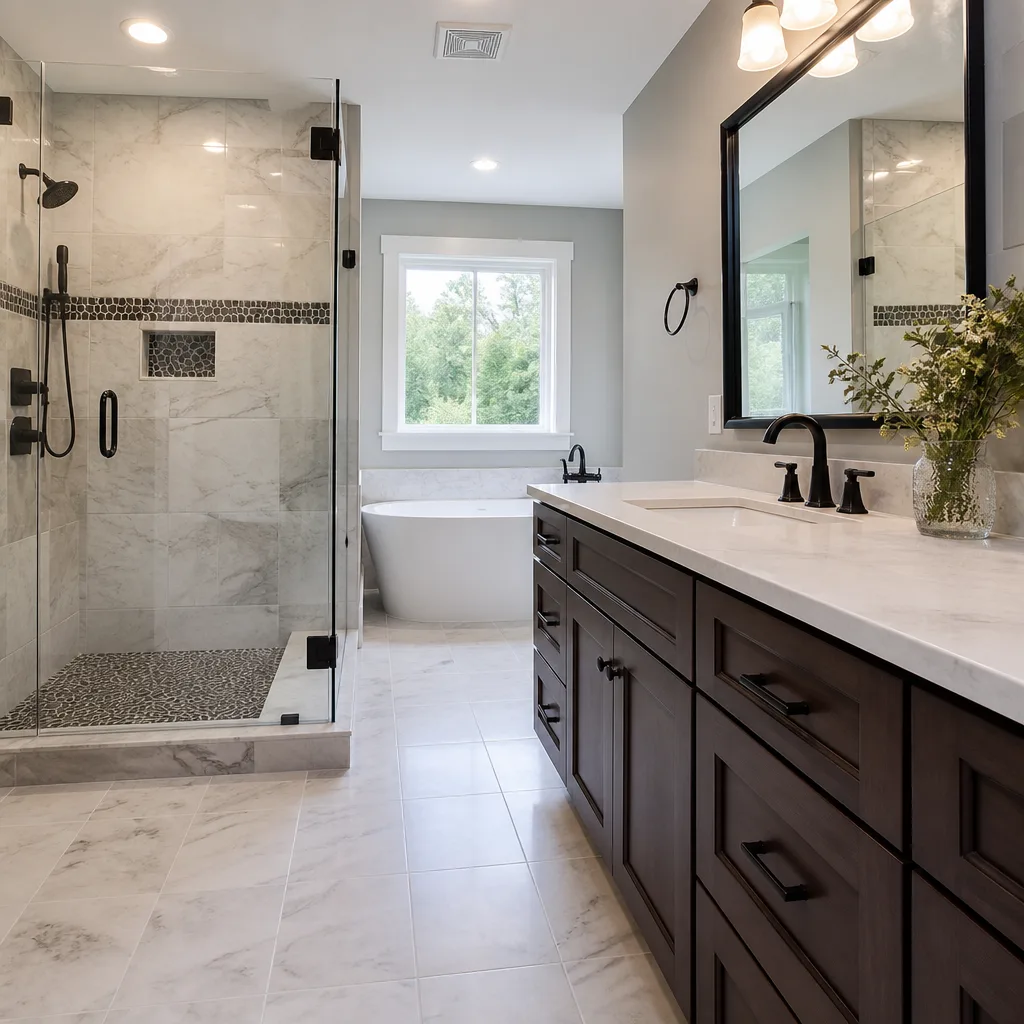
A full bathroom remodel in Los Angeles with an ECO window integrated into the waterproofing runs $10,620-$33,040. That range covers the complete project: demolition, plumbing and fixture setting, the wet-area waterproofing system, tile or solid-surface walls, flooring, the window trim and flashing work, and the finished paint and hardware. If your project is limited to the window itself plus the surrounding tile repair, the number sits at the lower end, typically in the $5,310-$10,030 range depending on whether we’re replacing the unit or rebuilding the wall assembly around it.
Here’s how the window portion of a Los Angeles bathroom remodel breaks down in our written quotes:
- Window removal and reset (if the unit is retained): $590-$1,180, including new flashing tape, sealant, and shims.
- OEM glazing bead or balance assembly (per window, parts only): $45-$210 depending on series and age.
- New construction or replacement ECO-compatible window (if the old unit can’t be saved): $945-$2,360 installed for a standard bathroom-sized unit.
- Extension jambs and interior trim built to the new wall depth: $355-$945 per window.
- Waterproofing integration (membrane tie-in at the window perimeter): $470-$1,180, which includes the sealant, the flashing, and the labor to make the waterproofing continuous.
Every Rowan quote is a flat written price before work begins. That includes the window work, the waterproofing, and the line-item breakout above, so you can see exactly where the window money goes. Nobody changes the window scope without a signed change order. That’s Clause 1 of the Haven Standard, and it’s stayed that way since 2007.
DIY or Call Us?
You can inspect your own bathroom window safely. Remove the interior trim carefully and look at the gap between the rough opening and the window frame. Is there insulation stuffed in there? Is there old caulk bridging the gap? That’s what you’re working with behind the tile. You don’t need to touch anything electrical or structural to see that.
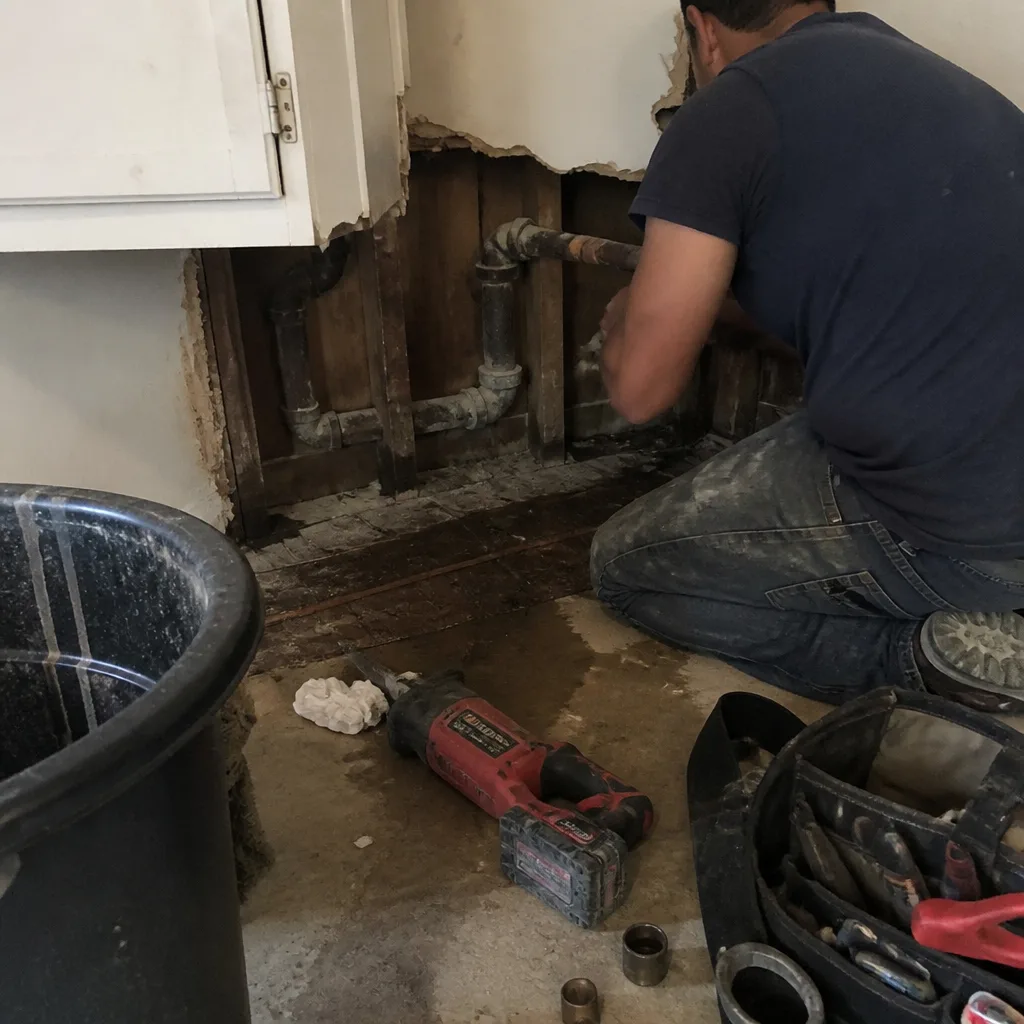
What you shouldn’t DIY is the waterproofing tie-in at the window perimeter. A bathroom window sits in the splash zone, and a mis-flashed window corner leaks into the wall cavity for months before it shows up as a stain on the ceiling below. We’ve opened Los Angeles bathroom walls where the water had been traveling horizontally along the framing for two feet before the homeowner noticed anything. The flashing sequence, the sealant choice, and the way the membrane laps over the window flange are all specific, and the cost of getting it wrong is a redo of the whole wall assembly. That’s a five-figure mistake the first time and a fifteen-minute job for our crew.
If you want someone to look at what you’ve got before you commit to anything, call (470) 298-9650 and we’ll send a background-checked, uniformed technician to document what’s there. You’ll get a photo record of the window condition and a written quote on the spot. No charge for the second opinion if you already have another contractor’s estimate.
FAQs
ECO’s vinyl bathroom windows typically last 20 to 30 years in LA’s climate, but the insulated glass seal often fails between years 12 and 18 because bathroom humidity accelerates seal degradation. The frame outlasts the glass, and we replace the sash or the sealed unit rather than the whole window when the frame is still square and watertight.
Yes, in most cases. If the ECO frame is intact, the glass is the only failed component, and the rough opening is in good condition, we replace the insulated glass unit or the sash and build the new waterproofing around the existing frame. That keeps the demolition smaller and the cost lower: $590-$1,180 for the window work instead of $945-$2,360 for a full unit. Call (470) 298-9650 and we’ll tell you which path applies to your window.
The window reset and waterproofing integration in a bathroom remodel typically takes one to two working days once the wall is opened. If we’re ordering an OEM part like a glazing bead or a specific sash balance, you may add two to five business days for delivery, which is why we identify those needs before demolition starts. The whole bathroom remodel runs two to six weeks depending on scope.
We stock the common consumables on our trucks: shims, flashing tape, high-grade exterior sealant, and the trim fasteners we use on every window job. Specific ECO parts like glazing beads, balance assemblies, and replacement sash units are ordered per job because ECO’s series numbers vary by year and frame depth, and we don’t guess on glass. We check the AAMA label during the walk-through and order the exact match that day. If you want to know whether your ECO window parts are available, call (470) 298-9650 with the label information and we’ll confirm stock and pricing.
Measure twice, say it once, show your work. That’s how we’ve handled bathrooms with ECO windows across Los Angeles for the better part of two decades, and it’s how we’ll handle yours.
Written by Grant Rowan, Owner, Rowan Construction Group at Rowan Construction Group, serving Los Angeles and nearby areas.