
Free written scope consultation - allowances, timeline, and change-order rules on paper before a single trade is scheduled
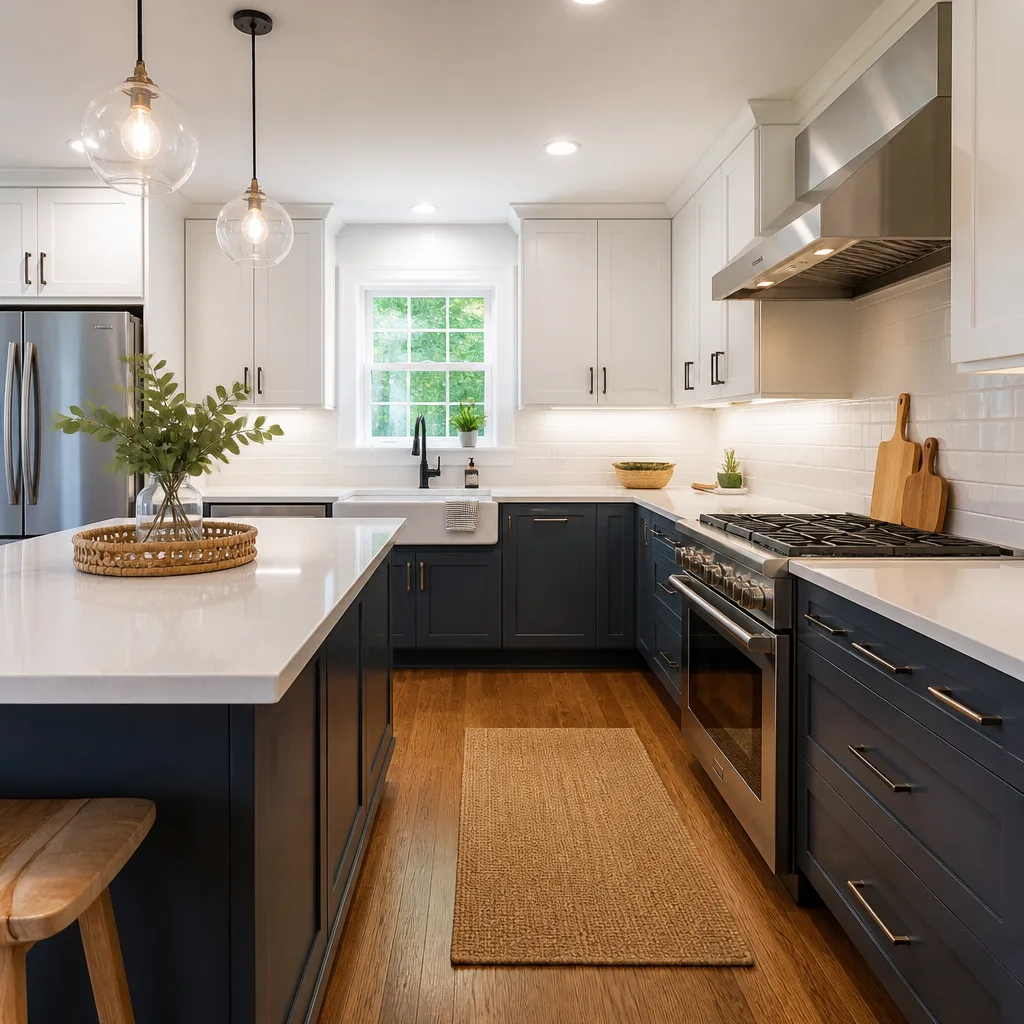
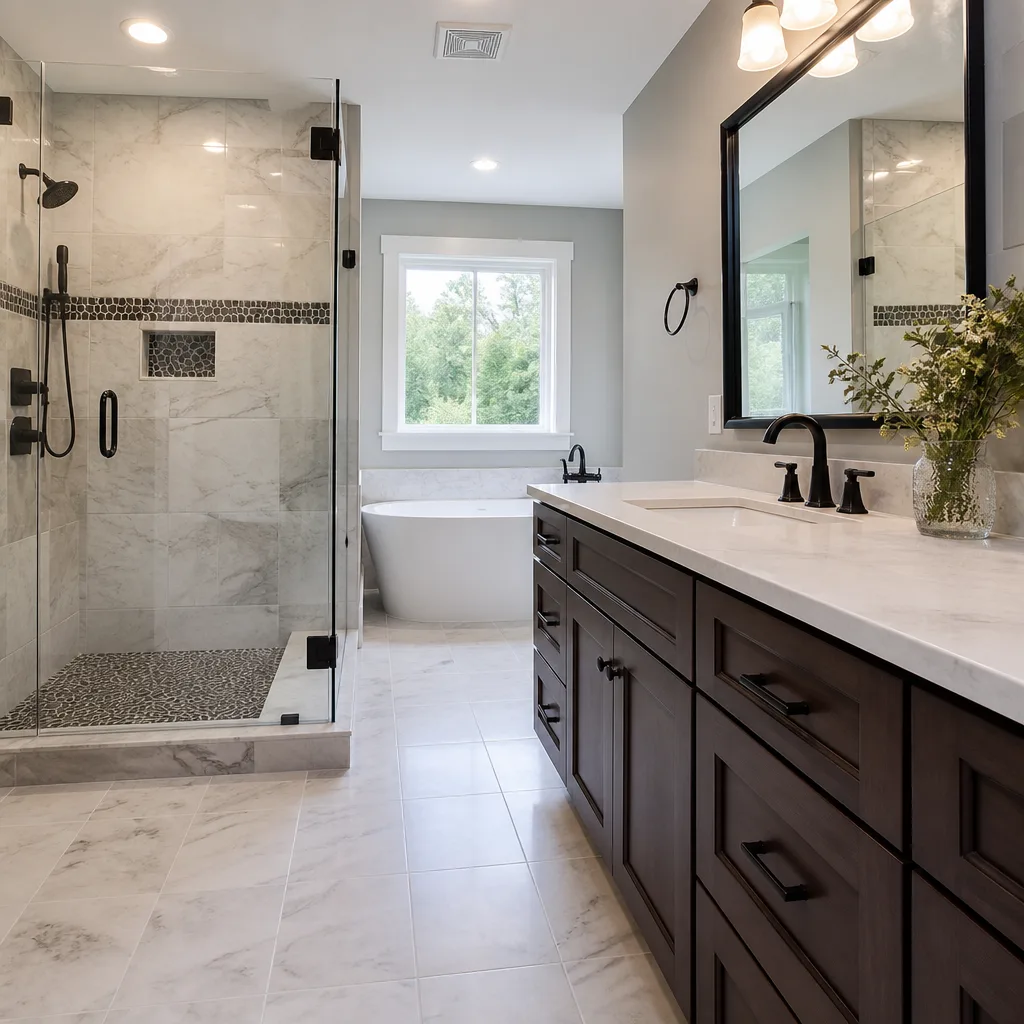
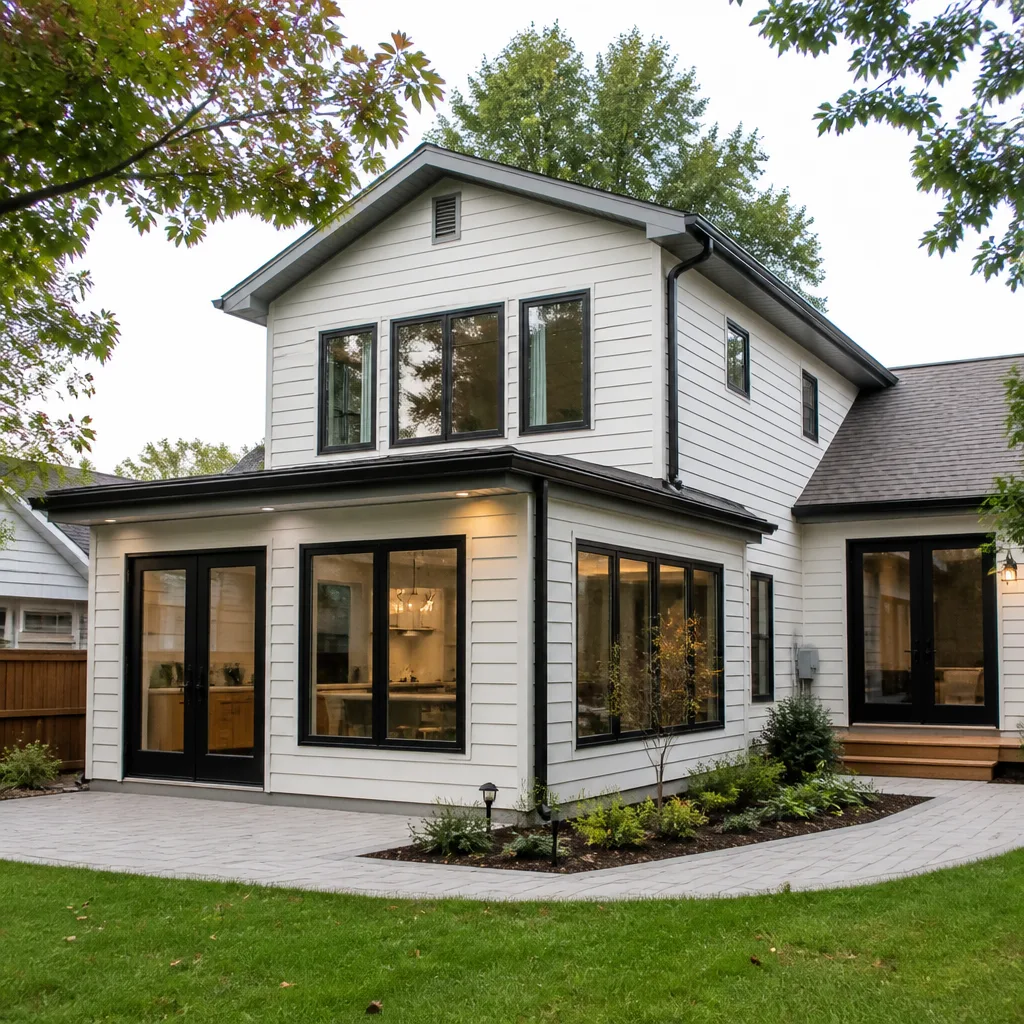
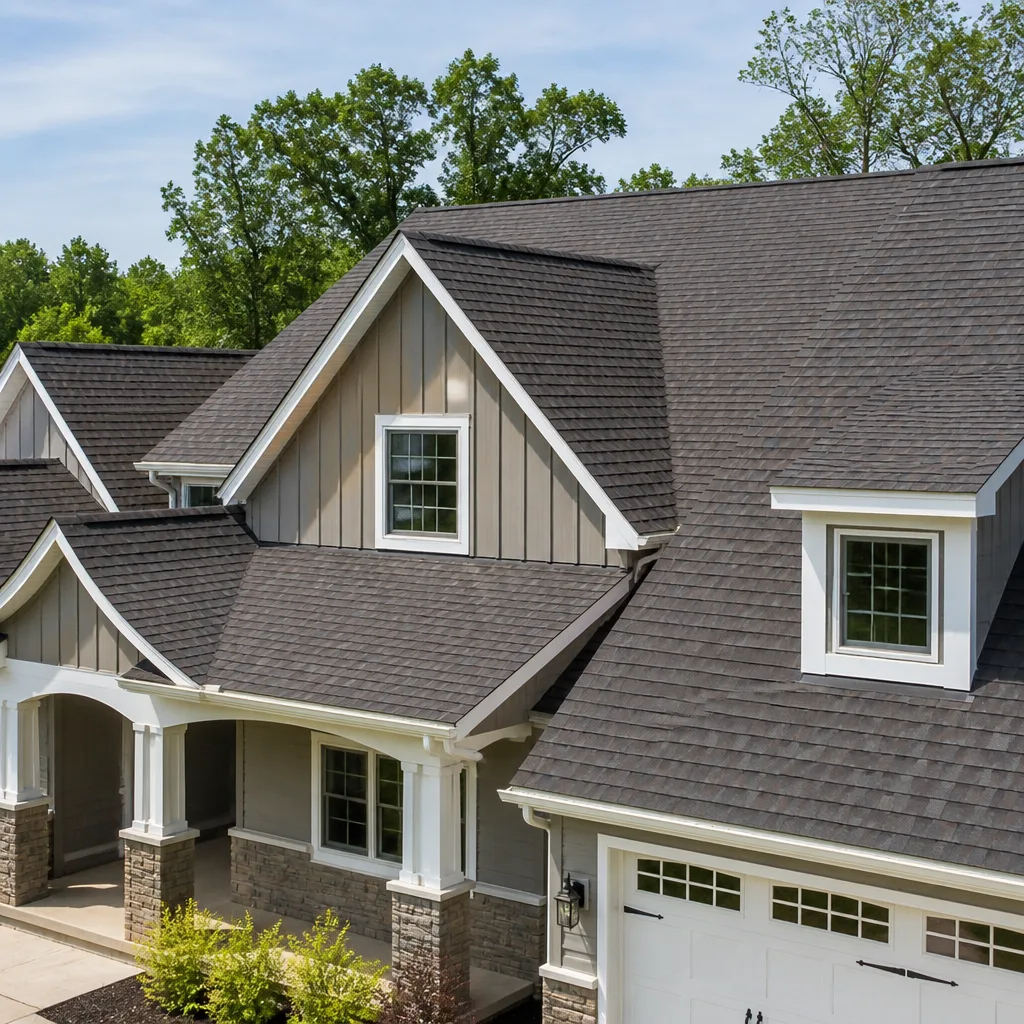
 Before
 After
After Before
 After
After Before
 After
AfterSakrete Kitchen Remodeling: The Los Angeles Owner’s Guide
Sakrete products show up in Los Angeles kitchen remodels most often as concrete countertops, concrete backsplashes, and floor-leveling compounds poured beneath tile. A full kitchen remodel in Los Angeles that incorporates Sakrete concrete surfaces typically runs $16,520 to $53,100 installed, and we stock the Sakrete lines we need to match existing work. Where owners usually discover a Sakrete-related problem: a hairline crack running through a concrete countertop near the sink, a backsplash pulling away from the wall, or grout lines that keep cracking because the subfloor wasn’t leveled with the right compound. Let’s walk through what actually goes wrong, what it costs to fix in Los Angeles, and when it’s worth calling us at (470) 298-9650.
Which Sakrete Products This Applies To
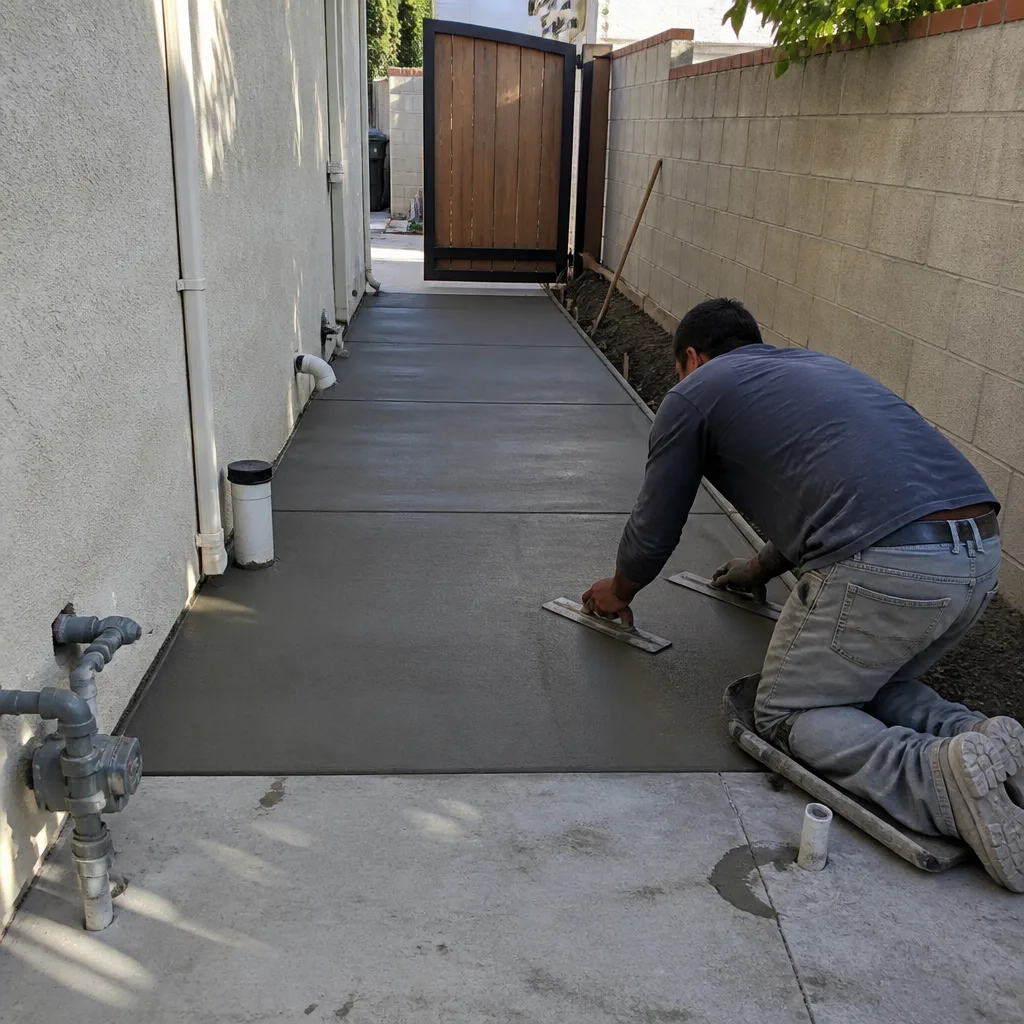
In kitchen work, we use three Sakrete categories: their concrete countertop mixes (including the 5000 Plus and standard Countertop Mix), their self-leveling underlayment for flattening floors before tile, and their sand topping mix used for setting large-format or thick tiles. The countertop mix is the one owners most often built with previously. Here’s the compatibility gotcha worth knowing: Sakrete’s countertop mixes from the last eight to ten years are formulated differently from what the brand sold in the early 2000s, so color-matching an older concrete surface with a fresh bag is hit-or-miss. On a repair or extension, we’ll typically grind a small patch sample before committing to a full blend, because once it cures, that’s the color you’re living with. For self-leveler and sand mixes, the practical difference is working time: the flowable leveler needs to go down in one continuous pour, and Los Angeles heat in August shortens that window by twenty to thirty minutes versus a winter pour. We note the mix lot’s setting behavior on the job record so the next repair isn’t starting from zero.
One thing to be clear about: Rowan Construction Group is an independent contractor. We’re not affiliated with Sakrete, and the brand exercises no control over our pricing, scheduling, or methods. We specify the material because it’s reliable and available across Los Angeles County at consistent prices, and because our crews know how it behaves in Southern California’s dry, warm climate.
Signs Your Sakrete Kitchen Surface Is Failing
- Hairline cracks radiating from the sink or faucet holes. This is the most common failure in Los Angeles, where concrete countertops sit under hard water deposits and get thermal cycling from hot water in the basin. The crack usually starts at a drilled faucet hole and runs toward the edge. The cause is almost always stress concentration around the cutout, not a bad mix.
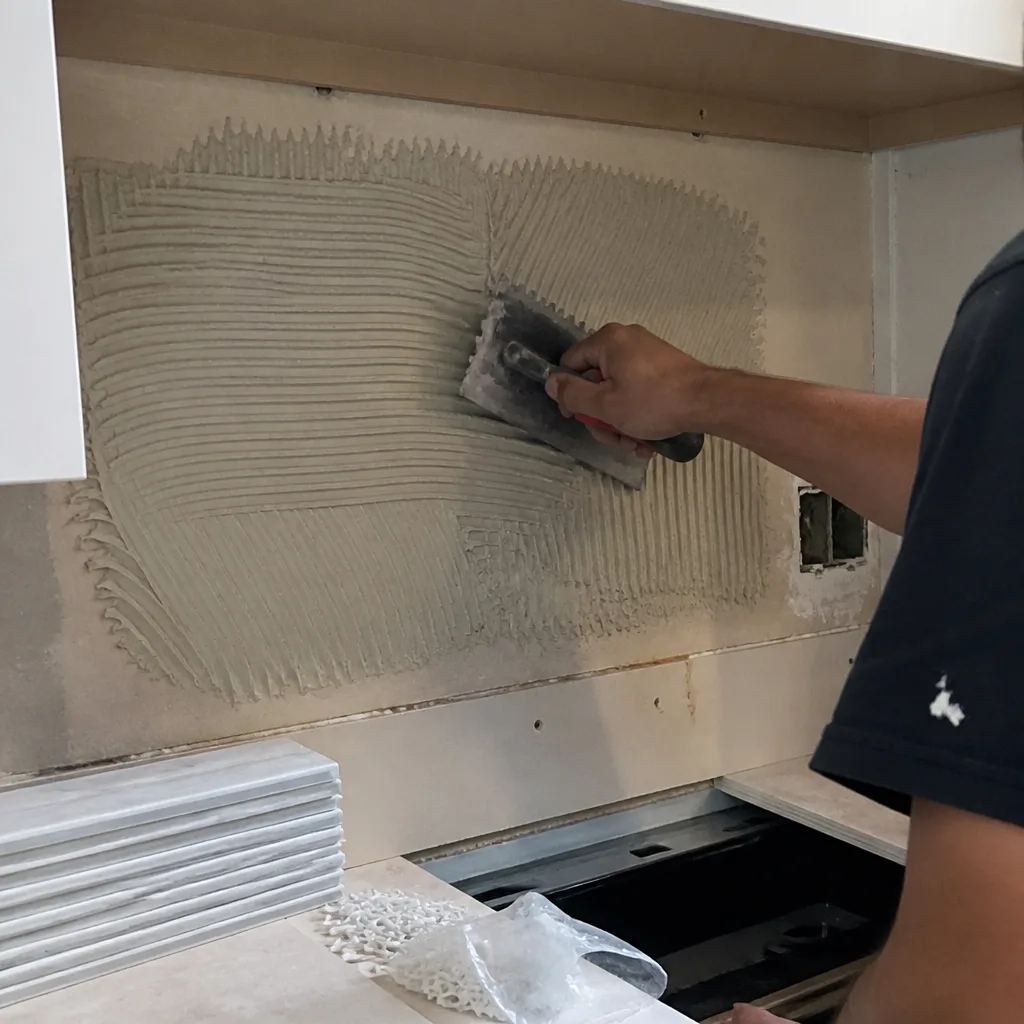
- Backsplash or edge forms pulling away from the drywall. Concrete countertops are cast in forms, and the backsplash is often a separate pour or a face-attached piece. When the wall behind it flexes or the adhesive bond breaks down, you’ll see a hairline separation line that collects crumbs and grime. It means the mechanical bond has failed, not that the concrete itself is bad.
- Grout cracks in tile laid over a Sakrete self-leveler. If the leveler was poured too thin over a plywood subfloor that deflects, the tile above telegraphs that movement as recurring hairline grout cracks. Los Angeles homes built on post-tension slabs see less of this; older wood-framed floors in neighborhoods like the Valley see it often.
- Staining that won’t lift with cleaning. Concrete is porous unless sealed. When the sealer wears down, oils, red wine, and citrus work into the surface. A stain that’s visibly wet in the concrete itself means the sealer is gone in that area and the concrete is wicking. Fixable, but it requires grinding back the top surface and re-sealing, not a quick polish.
- Pitting or scaling on the countertop surface. In Los Angeles, acidic juices (lemon, tomato, vinegar) etch concrete over time when sealer fails. Small pits under half an inch wide are a maintenance issue. Larger scaling means the surface treatment has failed and water has been cycling in and out of the concrete.
BeforeAfterReplacement Cost & What’s Included
Replacing or resurfacing one Sakrete concrete countertop in a Los Angeles kitchen generally runs $2,360 to $7,670 installed, depending on square footage, edge profile, and whether we’re pouring in place or precasting off-site. If the failure is in the subfloor leveler and requires pulling and resetting tile, that work sits inside the $16,520 to $53,100 full kitchen remodel range, with the floor portion usually landing around $1,500 to $4,500 for a typical 150 to 250 square foot kitchen. What drives the spread: the size of the pour, the complexity of the sink and faucet cutouts, whether the existing concrete needs grinding before a new pour, and whether you want integral color (mixed into the concrete) versus a surface stain. Every quote from Rowan Construction Group is a written, flat price before tools come off the truck. No change order without your signature, which is how we’ve kept project costs within a few percent of the agreed number since 2007.
DIY or Call Us?
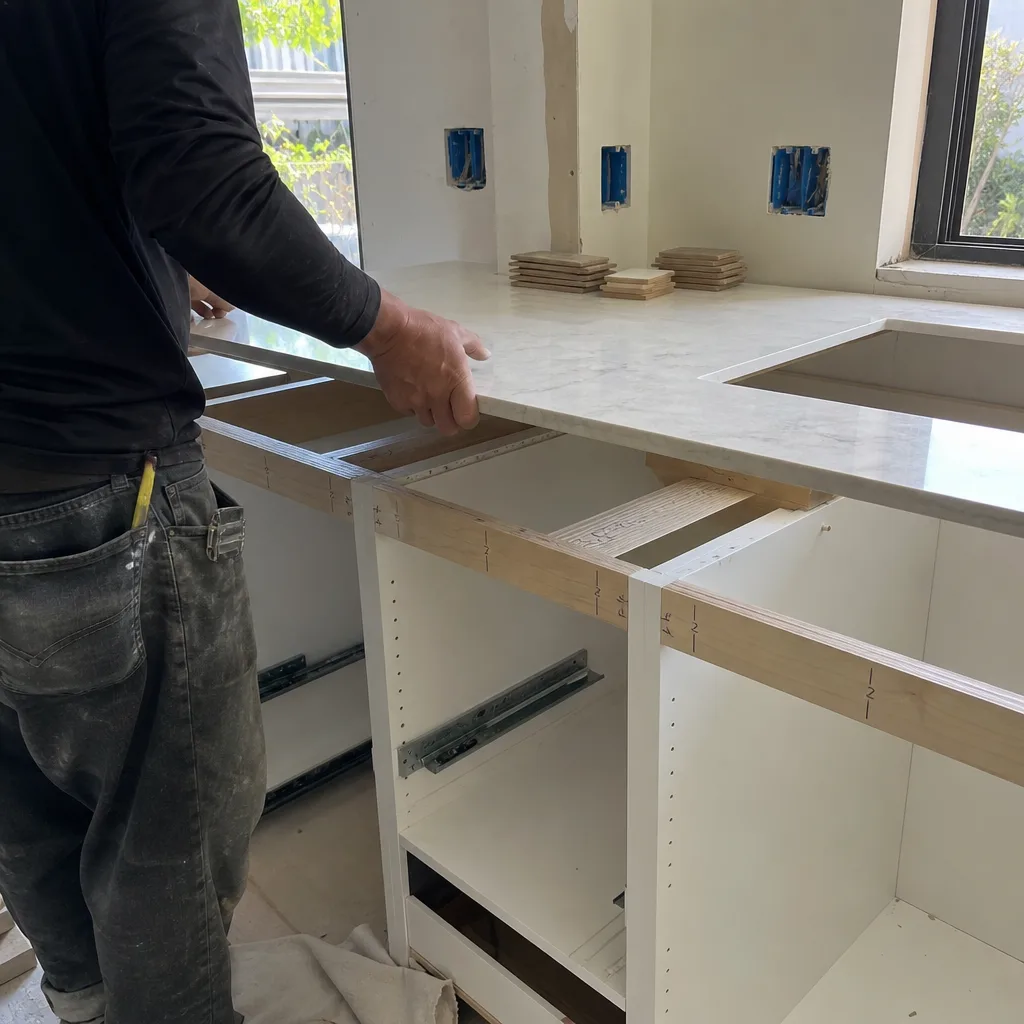
Concrete countertop repair is not electrical work, and it won’t kill you, but it will punish impatience. What an owner can safely check: is the crack stable (no movement when you press on either side), is the sealer beading water or soaking it in, and does the counter feel solid at the sink cutout. Those observations help us quote accurately over the phone. Where DIY goes wrong: grinding a cracked area and pouring a Sakrete patch only to find the color is a shade off, or the crack reappears in six months because the stress point was never reinforced. Concrete work is unforgiving in that way: once it cures, your mistake is permanent. If the surface is cosmetically tired but structurally sound, a professional grind, re-seal, and edge treatment will cost far less than a full recast. If the counter has a crack running corner to corner, you’re not patching it; you’re replacing it. Either way, call us at (470) 298-9650 and we’ll tell you which situation you’re in, in writing, before we schedule anything.
FAQs
With proper sealing every two to three years, a concrete countertop in Los Angeles should serve fifteen to twenty years before structural repair is needed. The dry climate helps; what shortens lifespan here is hard water mineral buildup and acidic food contact when sealer wears thin. Call (470) 298-9650 if you’re seeing pitting or staining through the surface, and we’ll assess whether it’s a re-seal or a resurface.
A stable hairline crack can often be ground out, filled, and blended so it’s nearly invisible, but a crack running through a sink cutout or expanding when you apply pressure signals structural failure that warrants replacement. The fix depends on whether the crack is cosmetic or load-bearing, and that’s a judgment call we’ll make looking at the actual surface, not a photo. Bring us a photo and we’ll give you a straight initial read at no charge.
A grind-and-reseal or small patch takes one day on site, while a full recast countertop takes five to seven days including cure time before you can use the surface. We’ll schedule around your kitchen’s downtime and document every step with photos. Estimates are free, and we’ll put the written price in your hand before anything starts.
Our crews keep Sakrete countertop mix, self-leveling underlayment, and sand topping mix on hand for standard repairs, and we can source specialty Sakrete products from Los Angeles area suppliers within one business day. For larger pours, we order fresh materials to spec so the lot numbers match across the whole counter. The price you sign is the price you pay, materials included.
Written by Grant Rowan, Owner, Rowan Construction Group at Rowan Construction Group, serving Los Angeles and nearby areas.