
Free written scope consultation - allowances, timeline, and change-order rules on paper before a single trade is scheduled
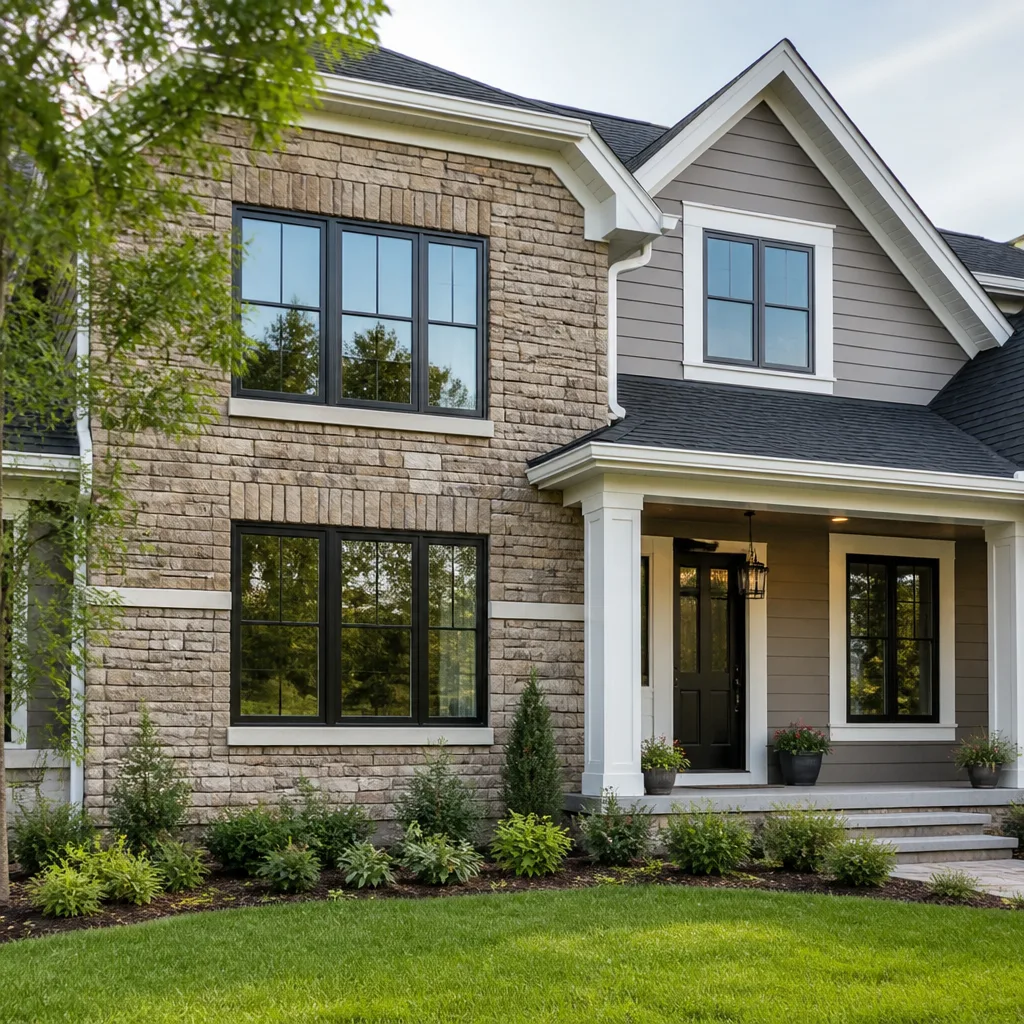
 Before
 After
After Before
 After
After Before
 After
AfterJames Hardie Kitchen Remodeling: The Los Angeles Owner’s Guide
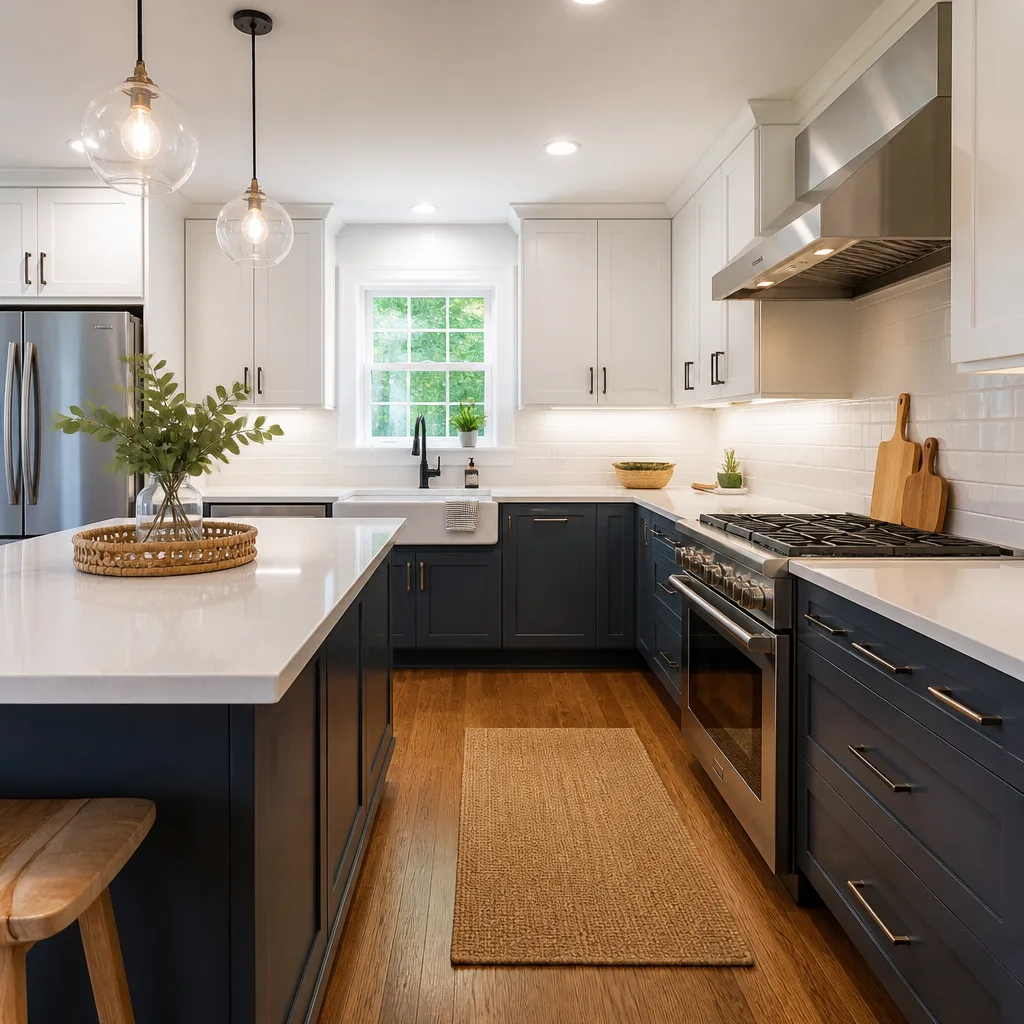
James Hardie kitchen remodeling in Los Angeles typically costs $16,520 to $53,100 installed, depending on whether you’re re-skinning cabinets with Hardie board accents, rebuilding a water-damaged wall behind the sink, or doing a full kitchen with HardieBacker underlayment and fiber-cement wall panels. We stock HardieBacker cement board in 1/4″ and 1/2″ thicknesses on our trucks and can usually match your existing board the same day we look at it. Most Los Angeles owners discover a James Hardie failure the hard way: a cabinet pulls loose from a wall that’s gone soft behind it, tile cracks along a seam, or a dishwasher leak sat against the board long enough to delaminate the edge around the kick space.
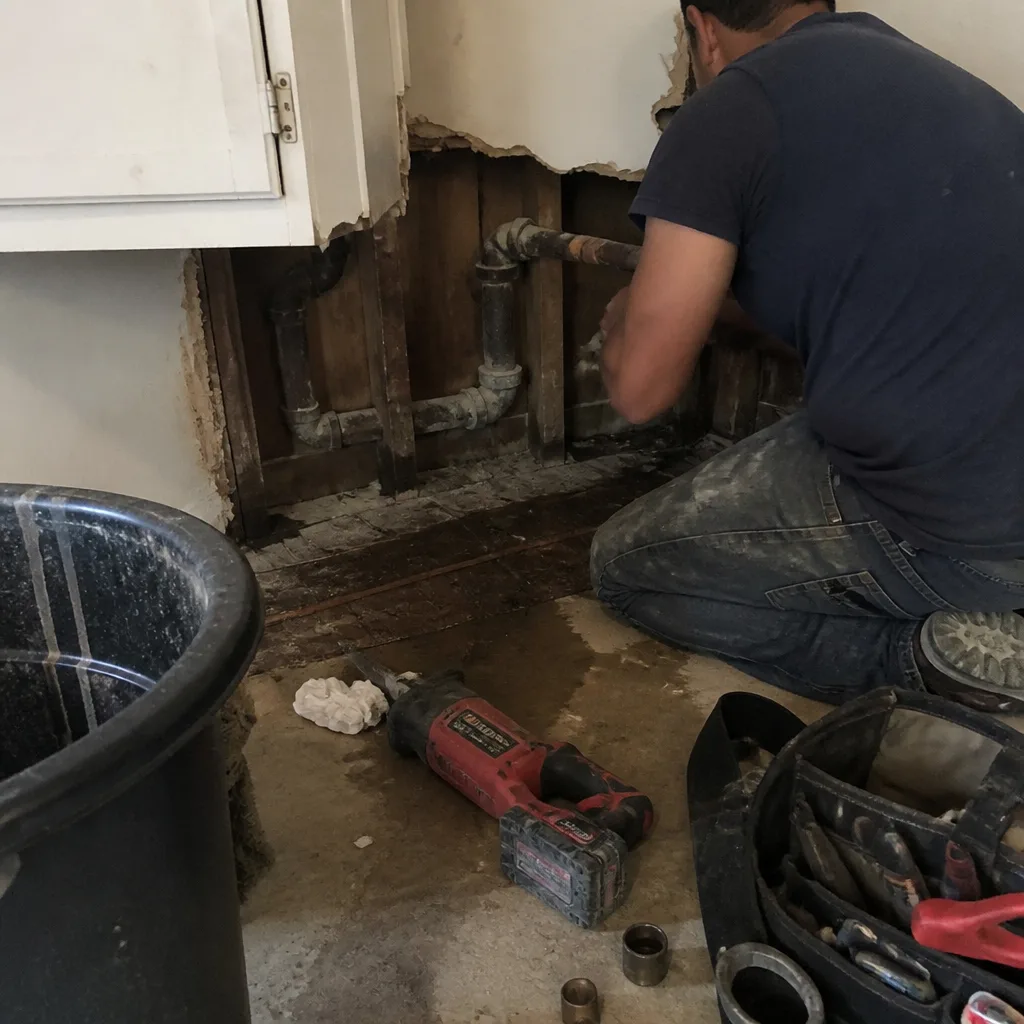
If you’re reading this because you just found swelling, crumbling, or a spongy spot under your kitchen tile, here’s what matters. James Hardie products are fiber-cement, which means they resist moisture differently than drywall but still break down when water sits against them for months. The board itself is rarely the original culprit. It’s usually a failed caulk joint, a sink drain that dripped slowly, or an improper fastener pattern that let a cabinet shift. The board ends up being the evidence, not the cause.
“Measure twice, say it once, show your work.” That’s how we approach every James Hardie kitchen job in Los Angeles, because the written price means nothing if we don’t also write down what we found when the old board came off.
Which James Hardie Models This Applies To
This page covers the three James Hardie products that show up in Los Angeles kitchens: HardieBacker 1/4″ cement board (used under tile floors and as a wall substrate behind backsplashes), HardieBacker 500 in 1/2″ (used on countertops and walls that need a stiffer base), and HardiePanel vertical siding (sometimes installed as a decorative wall surface in industrial-style kitchens, though less common). If you’re not sure which one you have, look at the board edge: HardieBacker 1/4″ measures 0.25″, comes in 3’x5′ sheets, and has a smooth side and a grid-printed side for screw placement. HardieBacker 500 is thicker, 0.42″, and comes in 4’x8′ sheets. HardiePanel has a woodgrain or smooth finish and installs with exposed or blind fasteners.
One compatibility gotcha we see often in Los Angeles: homeowners think any cement board swaps in for any other. It doesn’t. HardieBacker 1/4″ is not rated as a structural panel, meaning it needs a solid subfloor or stud wall behind it. If your kitchen has an older plank subfloor or 24″-on-center stud spacing, code requires 1/2″ HardieBacker 500 or a different substrate entirely. We’ll check this before we quote, because guesswork on substrate thickness is how you get cracked tile six months later.
On the OEM-versus-aftermarket question: James Hardie doesn’t license aftermarket equivalents for their cement board. What you’ll find at some Los Angeles supply houses is fiber-cement board from manufacturers like USG or CertainTeed. It’s fine product, but it’s not identical in thickness tolerance or screw-hold rating. When we’re under a permitted kitchen remodel, we install actual HardieBacker unless you specifically approve the substitute in writing. That’s not brand loyalty. It’s because the tile layout math and the fastener schedule assume the board meets Hardie’s published specs.
Signs Your James Hardie Kitchen Remodeling Is Failing
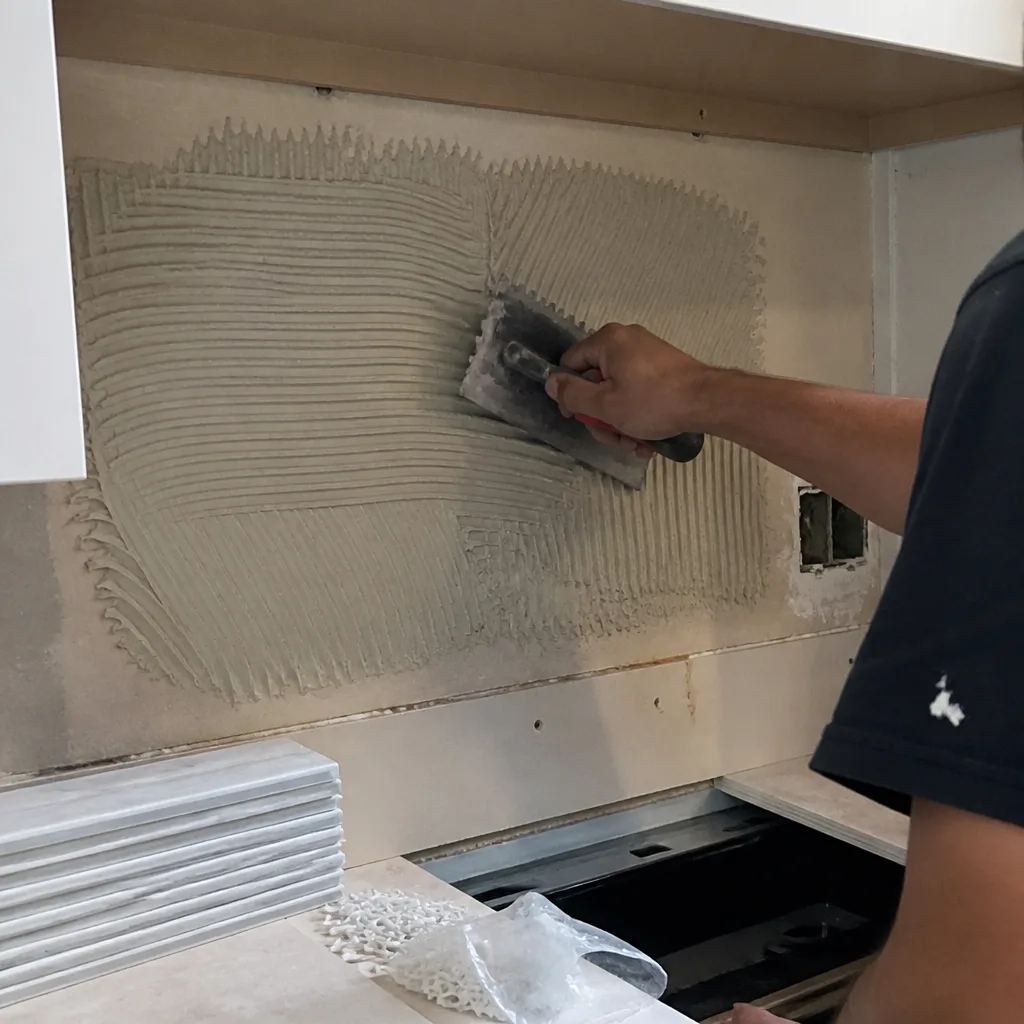
- Grout cracks running in straight lines across the floor. This almost always means the cement board seams weren’t taped with alkali-resistant mesh tape, or the board was laid with butt joints instead of the 1/8″ gap Hardie specifies. The board expands and contracts with temperature shifts in Los Angeles, and un-taped seams telegraph straight through the tile.
- A cabinet that’s pulled away from the wall near the sink. Water wicked behind the backsplash, saturated the HardieBacker edge, and the fasteners lost their bite. The board can look fine from the front while the back side crumbles like wet cardboard.
- Spongy spots in the floor in front of the dishwasher or sink base. Los Angeles kitchens with older slab foundations wick moisture upward. HardieBacker over slab needs a moisture barrier underneath, and if someone skipped it, the board absorbs ground moisture and softens from below.
- Visible swelling or dark staining at the bottom of a HardiePanel feature wall. This is usually water from floor mopping or a minor appliance leak sitting against the panel edge. Fiber-cement doesn’t rot like wood, but it does wick and stain at cut edges unless they’re sealed.
- Tile that sounds hollow when you tap it. The thinset bond between tile and HardieBacker has failed, which we trace back to either the wrong thinset (unmodified is required between tile and HardieBacker) or the board was dusty on install day. A hollow section means the tile is riding on the board but not bonded to it.
BeforeAfterReplacement Cost & What’s Included
The full kitchen remodel range in Los Angeles is $16,520 to $53,100. If you’re just replacing failed HardieBacker behind a backsplash or under a floor before re-tiling, you’re generally in the $2,360 to $7,670 countertop-and-substrate range, though each job gets a specific written price after we measure and inspect. The range depends on three things: how much board comes out, what we find behind it, and whether the finish material (tile, cabinet, countertop) has to come off and go back on.
Every quote includes the board, the correct fasteners and seam tape, the thinset if we’re tiling, disposal of the old material, and a documented photo record of what we found when the old board came off. You get the written price before any work starts, and if we open a wall and find something the quote didn’t cover, nothing proceeds until you’ve signed a change order with the new number on it. That’s been the discipline since 2007, and it’s why our projects finish within a few percent of the agreed cost. Workmanship carries the 365-Day Done Right Promise: if it’s not done right, we make it right.
DIY or Call Us?
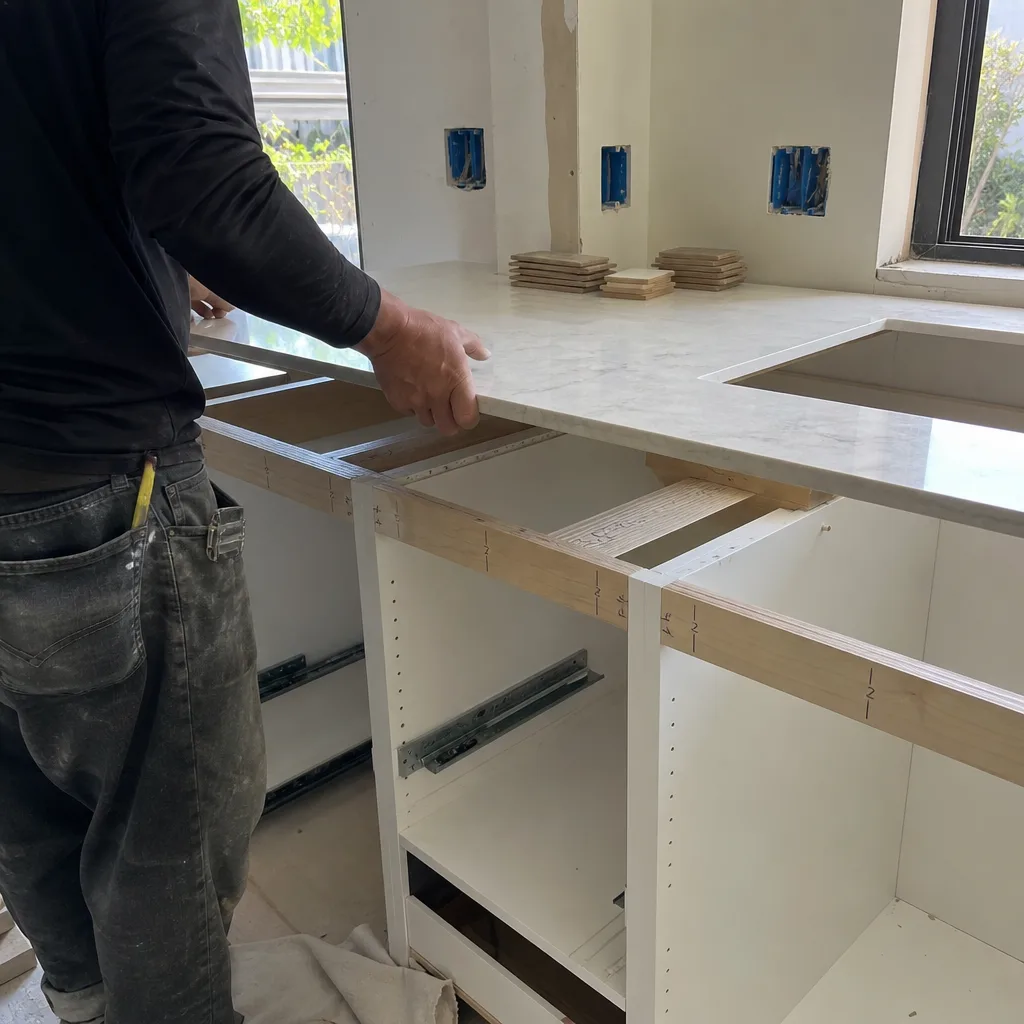
What you can safely check yourself: read the board edge for thickness marking, look for the grid pattern or label, check whether seams show signs of un-taped joints, and note where water might have come from. That information speeds up the quote. What gets risky fast: cutting fiber-cement board without proper dust control. HardieBacker dust contains silica, and cutting it with a circular saw in a closed Los Angeles kitchen without a HEPA vacuum and respirator is a respiratory hazard. It also voids the product warranty if installed against Hardie’s published fastener and joint specs.
If the failure is a small section behind a backsplash and you have tile coming off anyway, a careful homeowner can replace a single sheet. But if you’re seeing symptoms in the floor, near load-bearing cabinet runs, or around the sink plumbing, call us at (470) 298-9650. We’ll look at it, write the price, and you decide. Free estimate, no follow-up pressure.
FAQs
HardieBacker and HardiePanel carry a 10-year limited product warranty and, when installed correctly with proper moisture barriers and seam treatment, the board itself will typically outlast the tile, cabinets, and countertop above it. In Los Angeles, the failures we see at the 7-to-12-year mark are almost always a problem that started behind the board: a slow dishwasher leak, a bad caulk line, ground moisture wicking up through the slab. The board held as long as it could. The repair question is really a water-source question first.
If you’re seeing any of the failure signs above and want to know whether you’re looking at a board replacement or a bigger issue, call (470) 298-9650. We’ll tell you what we think and put the number in writing before anything proceeds.
You can seal a small exposed edge or re-tape a short seam, but you cannot repair a saturated or crumbling fiber-cement board. Once water has wicked into the board, its screw-hold strength and thinset bond are gone, and patching over it just delays the same failure by a year or two. The board comes out, the framing or subfloor gets inspected, and new board goes in. The repair is really a replacement. Call (470) 298-9650 for a free written estimate on the replacement.
A single backsplash section or a few floor sheets can be done in one day, not counting tile-setting time afterward. If we’re pulling cabinets or countertops to reach the damaged board, expect two to three days, and if the water damage extends into framing or the subfloor, we won’t know until we open it, which is why the change-order process exists. You’ll have a written scope before we start and a signed change order before anything you didn’t approve proceeds.
We keep 1/4″ and 1/2″ HardieBacker in standard sheet sizes on the truck, plus the correct alkali-resistant mesh tape and Hardie-approved screws. HardiePanel is typical order-ahead material from our Los Angeles suppliers, usually next-day. We also stock compatible products from KraftMaid for cabinets, Cambria for countertops, and Silestone for certain surfaces, so a substrate replacement can be quoted alongside whatever finish work it touches.
Written by Grant Rowan, Owner, Rowan Construction Group at Rowan Construction Group, serving Los Angeles and nearby areas.