
Free written scope consultation - allowances, timeline, and change-order rules on paper before a single trade is scheduled
 Before
 After
After Before
 After
After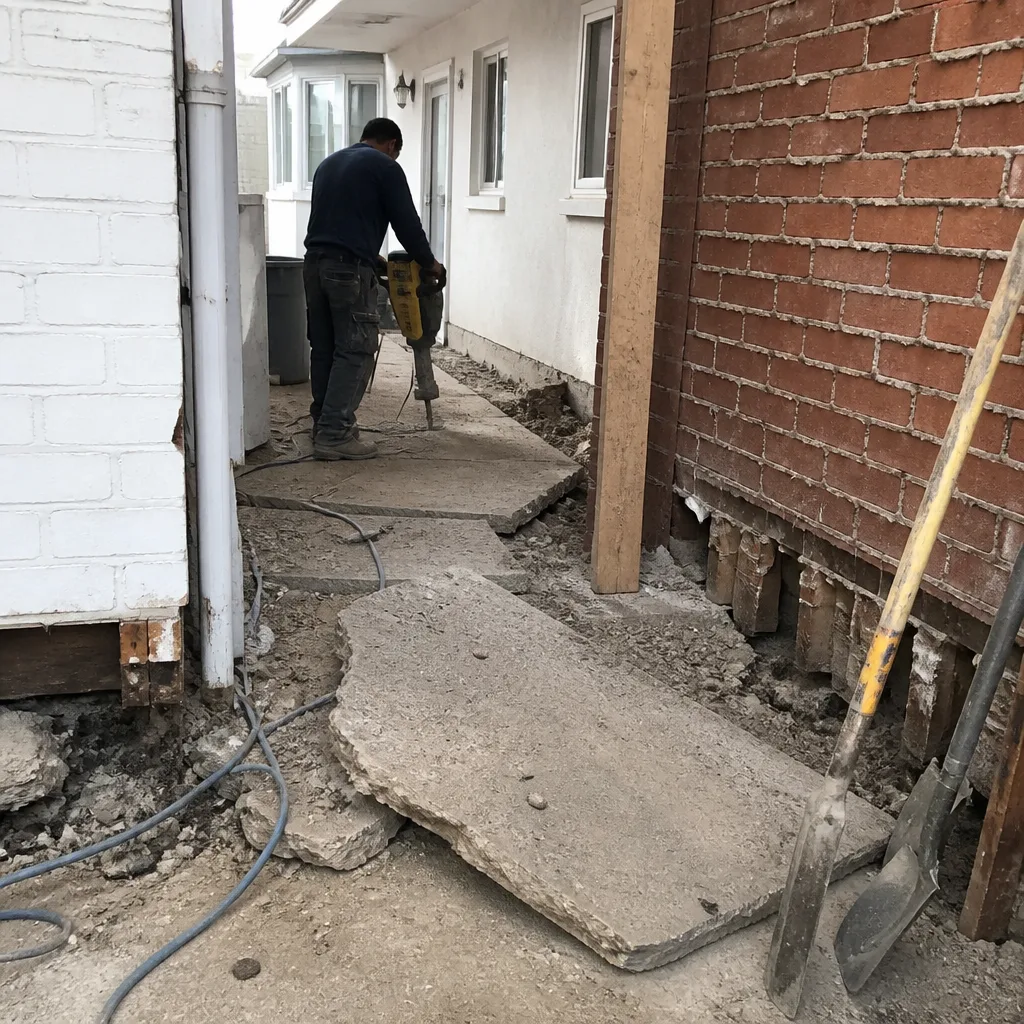 Before
 After
AfterBelgard Driveway & Pavers: The Los Angeles Owner’s Guide
We stock and install Belgard-compatible driveway and patio pavers across Los Angeles, with most paver replacements and repairs running $295 to $4,130 depending on the area and what’s underneath. If you have a failed paver, a sunken section, or crumbling edging, we can usually identify the specific Belgard series on the first visit, price the fix in writing, and get it scheduled within a week. Most homeowners discover the problem the hard way: a paver splits under the weight of a parked car, a section of the driveway settles after winter rain, or the sand between the joints washes out and the pavers start shifting.
One thing worth knowing before you start calling around: Belgard pavers are modular, and not every series is interchangeable. A paver from the Catalina collection won’t match the color lot or dimensions of a paver from the Mega-Arbel line, even if both look gray in a photo. That matters more than you’d think on a repair, because a mismatched paver shows up like a patch on a pair of jeans. We keep a working inventory of the most common Los Angeles Belgard series, and our crews carry a caliper and a color chart on the truck to match the profile before we ever break ground.
Which Belgard Models This Applies To
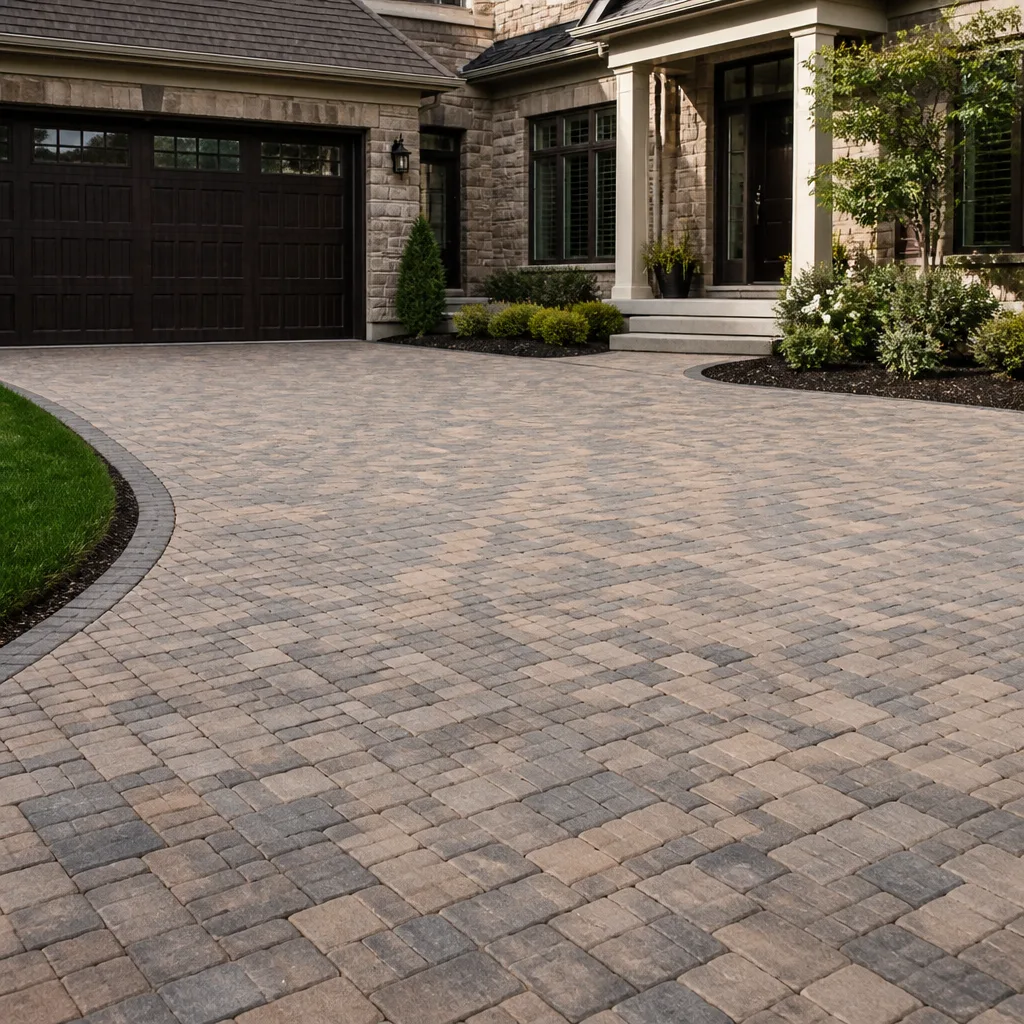
Belgard’s residential paver lines break into a few families, and they’re not interchangeable. The Mega-Arbel and Mega-Lafitt series are the bigger-format pavers (roughly 16″ x 16″ or 16″ x 24″) that show up on a lot of Los Angeles driveways; they read like large stone slabs and carry the weight of a vehicle well when the base is done right. The Catalina, Cambridge, and La Scala lines are the traditional cobble-look pavers, smaller in footprint, and they’re more forgiving on patios and walkways than on a driveway that gets a daily 4,000-pound car on it. Urbana and Aqualina are the contemporary, straight-line pavers the spec-driven homes in Los Angeles tend to use for a cleaner finish.
How do you identify what you have? Count the visible surface dimensions, check the underside for a mold stamp (Belgard stamps the series name on the bottom of most pavers made after 2010), and look at the edge profile. A beveled edge is usually Catalina or Cambridge; a crisp, square edge is Urbana or Aqualina. If the paver predates the stamp or the stamp is worn off, we’ll take the measurements and a photo to our distributor to match the current production color lot. Important: Belgard runs color lots by batch, and a paver poured in 2018 will be a shade off from a paver poured in 2024, even at the same “Granite” designation. That’s the gotcha that catches most owners off guard.
We are an independent contractor, not a Belgard dealer or affiliate. We install and repair Belgard product because it’s a solid paver and the colors are consistent enough to work with, not because anyone pays us to say so. We also stock and source parts for KraftMaid, Cambria, and Silestone on the indoor side of our work, so we’re familiar with the “which exact model line is this” conversation.
Signs Your Belgard Driveway & Pavers Is Failing
- A single cracked paver under the car’s tire line. That’s almost always a base problem, not a paver problem. One crack usually means the compacted base below that spot has settled or healed a soft spot, and the paver is absorbing the flex. The paver is a symptom; the base is the disease. If you only replace the paver without addressing compaction, you’ll crack the replacement within a season or two.
- Edge pavers drifting outward or separating from the gutter. Most pavers of any brand fail first at the edge where there’s no confinement. The edge restraint, usually plastic or concrete, has broken loose or was never installed for a driveway application. Driveways see far more lateral pressure than patios; a patio edge detail won’t hold a driveway edge.
- Sand between joints disappearing after heavy rain. Los Angeles gets exactly enough rain to test this. Polymeric sand is a maintenance material, not a permanent one. If the joints are washing out every winter, the sand was swept too shallow, the gradation of the base is too open, or the slope isn’t carrying water away before it saturates the joint material.
- Pavers rocking or tilting when you step on them. A rocker is a clear sign the base has a void under the paver or the bedding sand has migrated. In Los Angeles’s clay-heavy soil, this happens after a wet winter when the ground swells and then shrinks as it dries. If you ignore a rocker, it’ll crack; the paver has no support under the majority of its surface.
- The surface looks chalky or has white powder on it. Efflorescence is common on concrete pavers, especially on Belgard’s lighter color blends. Water moves through the paver, draws calcium to the surface, and evaporates, leaving the salt behind. It doesn’t mean the paver is failing structurally, but it does mean water is moving through the pavers more than it should, which points back to drainage or base slope.
BeforeAfterReplacement Cost & What’s Included
Paver driveway installation in Los Angeles runs $8,260 to $21,240 for a full new driveway, and paver patio installation lands between $4,130 and $12,980, depending on square footage, base condition, and which Belgard series you’re using. For a repair, the range is tighter: a paver replacement or small section repair typically runs $295 to $2,500, and a larger base correction or edge rebuild can run $2,500 to $5,000 when we’re removing and re-compacting a meaningful section.
Here’s the breakdown of where the money goes:
- Pavers themselves: $2.50 to $6.50 per square foot for Belgard residential lines, with the larger-format Mega series at the higher end and the standard cobble lines at the lower.
- Base and bedding material: Crusher run, sand, and edge restraint. On a repair, this is often more than half the labor cost if the base is the problem.
- Labor: Excavation if needed, re-compaction, re-screeding, laying, cutting, and joint sand. Los Angeles labor rates for paver work run higher than the state average because of access, permitting, and the general cost of doing business here.
- Haul-off: Demolition debris and removed pavers, which in Los Angeles means a trip to a transfer station, not a backyard burn pile.
Every quote we write is a flat price with a written scope. That means the number on the page is the number you pay, unless you ask us to change the scope, at which point the change is written, signed, and priced before anyone touches a tool. Under Clause 1 of the Haven Standard, the price is written before work starts. The work itself carries our 365-Day Done Right Promise: if it is not done right, we make it right. For paver work, that means if a section we set settles, cracks, or shifts within a year, we come back and fix it without a change order.
DIY or Call Us?
There are things an owner can safely check on a Belgard paver installation: clear the joints and see if the sand level is holding, note where water pools after a rain, check if the edge restraint is visible or buried, and photograph the broken paver’s underside for the series stamp. All of that takes a Saturday morning and costs nothing, and it makes our first visit faster.
What an owner should not do is pull and reset a broken paver on a driveway without checking what’s underneath. A driveway paver carries a car’s weight spread over a small footprint, and if the base is the problem, a loose-laid replacement paver becomes a trip hazard and a split risk the first time a tire catches it. This is not high-tension dangerous like a garage door spring, but it is structural, and a paver that rocks under a car can crack and send a chunk through the air if it pops under the right force. If the issue is one cracked paver and the base underneath is still solid, that’s a doable homeowner fix with a rubber mallet, a flat bar, and patience. If the section is sinking, rocking, or the edges are spreading, the fix requires re-compaction and re-screeding, and that’s our world. Call us at (470) 298-9650 and we’ll tell you which situation you have, honestly, before we ever send a crew. Measure twice, say it once, show your work.
FAQs
A properly installed Belgard paver driveway in Los Angeles should last 25 to 40 years on the paver itself, but the base underneath it typically needs attention between years 15 and 20, because that’s when the compacted material starts to shift in LA’s shrink-swell clay soils. The pavers don’t really wear out; the ground under them changes. That’s why we spend more time on base preparation than on laying the paver itself. Call (470) 298-9650 for an exact assessment of your base condition; estimates are free.
Yes, in most cases a cracked or sunken Belgard section can be repaired by removing the affected pavers, re-compacting and re-screeding the base, and relaying the same pavers, which is usually less expensive than a full replacement because the paver material itself is still usable. The deciding factor is the condition of the base under the section: if it’s settled from poor original compaction, the repair is straightforward; if the subgrade is eroding or the base was never built to driveway spec, a larger correction is needed. Call (470) 298-9650 for a written quote on your specific section.
A single paver replacement or small section repair typically takes half a day to a full day on site, and a larger base correction with re-compaction can run two to three days including cure time for the edge restraint and polymeric sand. For a section repair, the driveway is typically usable within 24 hours after the joint sand is activated. Call (470) 298-9650 and we’ll give you a realistic window based on the size of the affected area, not a salesperson’s guess.
We keep a working inventory of the most common Los Angeles Belgard series on hand, including both the cobble and larger-format lines, but because color lots vary by production batch we often pull exact matches from our distributor to get the current lot rather than selling you an off-shade patch. If you have a series that’s been discontinued, we can usually source the current equivalent or advise you on the closest available match. Call (470) 298-9650 with the paver underside stamp or a photo, and we’ll tell you in one call whether we have the match on the truck.
Written by Grant Rowan, Owner, Rowan Construction Group at Rowan Construction Group, serving Los Angeles and nearby areas.