
Free written scope consultation - allowances, timeline, and change-order rules on paper before a single trade is scheduled
 Before
 After
After Before
 After
After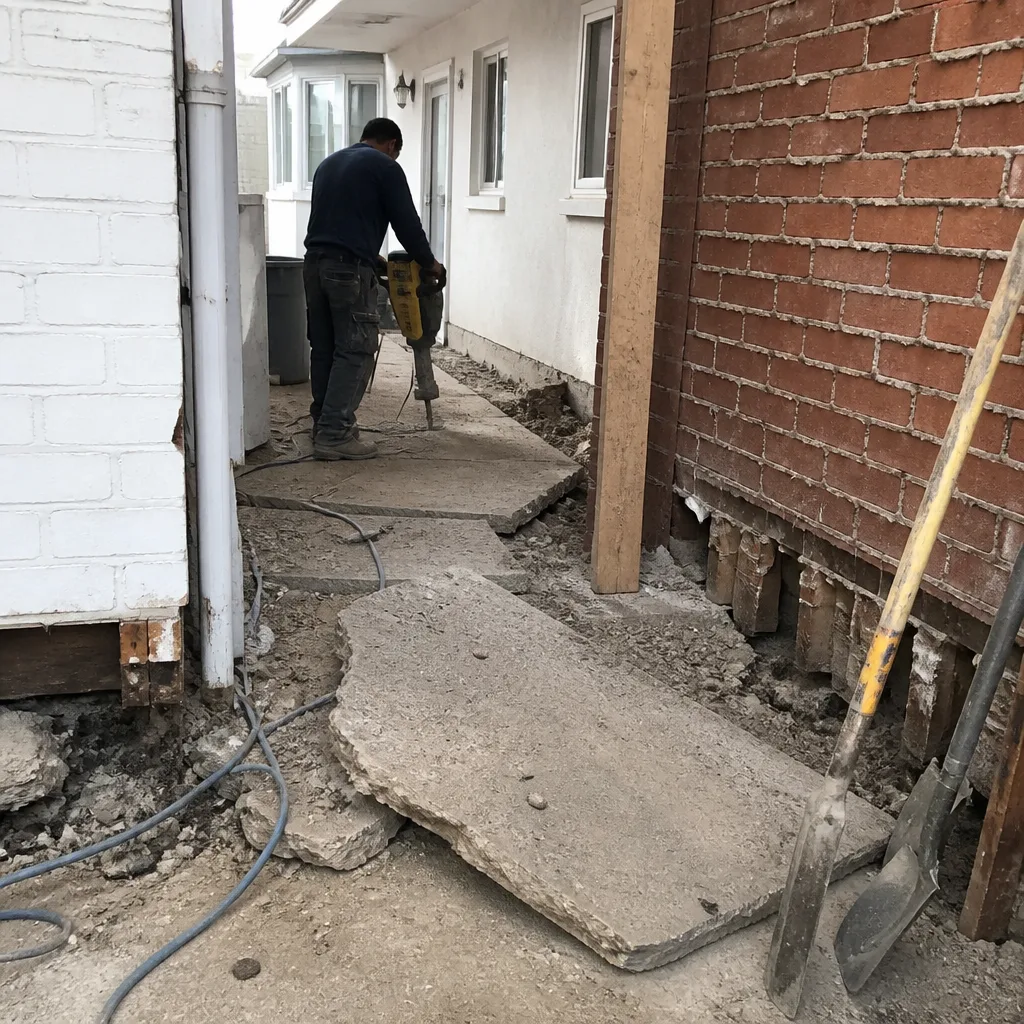 Before
 After
AfterQuikrete Home Additions & ADU: The Los Angeles Owner’s Guide
If you’re planning a home addition or ADU in Los Angeles that will use Quikrete concrete products, the installed project typically runs $53,100-$153,400, with the Quikrete material line itself (bags, fast-setting mixes, crack-resistant blends) accounting for roughly $1,200-$4,800 of that total depending on foundation size and slab depth. We stock Quikrete-compatible products and install them as part of our Home Additions and ADU trade, and we can usually have a crew on-site for an estimate within the week. What we can’t always do is get the exact Quikrete formulation same-day if it’s a specialty mix, so if your pour is scheduled, we order early.
The way homeowners usually discover a problem is not with the concrete itself but with what the concrete sits on or against. A hairline crack shows up along a new ADU foundation wall. Water pools at the edge of a slab because the grade wasn’t compacted right. Or a city inspector flags the setback and the whole pad has to come out. The concrete is rarely the first failure point. The prep below it usually is.
Quick answer: We install Quikrete-based home additions and ADU foundations in Los Angeles for $53,100-$153,400 all-in, with concrete material costs itemized separately on every written quote. Estimates are free. Call (470) 298-9650 to schedule yours.
Which Quikrete Models This Applies To
Quikrete doesn’t make “models” the way an appliance brand does. It makes formulations, and the formulation matters more than the bag color. For Los Angeles ADU and home addition work, the three we reach for most often are:
- Quikrete 5000 - the standard for structural slabs, footings, and foundation walls. 5,000 PSI compressive strength, which is the minimum we spec for any ADU foundation in Los Angeles County. Costs about $6-$7 per 80-lb bag at local suppliers, with roughly 42 bags per cubic yard of mixed concrete.
- Quikrete Crack-Resistant Concrete Mix - reinforced with synthetic fibers. We use this for driveway aprons, walkways, and small pads where shrinkage cracking is the main concern. Runs $7-$9 per bag.
- Quikrete Fast-Setting Concrete Mix - for fence posts, gate footings, and any pour where we need the form pulled the same day. Sets in 20-40 minutes, but it’s not structural. We don’t use it for foundation walls or load-bearing slabs.
The compatibility gotcha most homeowners miss: Quikrete 5000 and Quikrete’s standard Concrete Mix look nearly identical on the shelf, and the bags are the same size. We’ve walked onto job sites where a well-meaning homeowner picked up 40 bags of regular Quikrete for a load-bearing wall because it was $1.50 cheaper per bag. On a 200-bag pour, that’s $300 saved and a foundation that doesn’t meet the engineer’s spec. If a stamped plan says “5,000 PSI minimum,” do not substitute. The city inspector in Los Angeles will check.
Signs Your Quikrete Home Additions & ADU Is Failing
- Cracks wider than 1/8 inch running through the slab. Hairline cracks are normal concrete behavior. Cracks you can fit a nickel into mean the slab is moving, and that means the subgrade below it was never properly compacted or drainage is eroding it from the edge. In Los Angeles’s expansive clay soils, this shows up within the first two wet seasons if the prep was skipped.
- Water pooling against the foundation edge after rain. Los Angeles gets most of its rain in a few short months, so when it comes, it comes hard. If water sits against a Quikrete foundation wall instead of draining away, the soil swells, the wall gets pushed, and you see diagonal cracks at the corners. The fix is drainage and grading, not more concrete.
- Powdery white residue on the concrete surface. That’s efflorescence, and it means water is moving through the slab. In an ADU, that means the vapor barrier below the slab was punctured, missing, or installed incorrectly. The concrete itself is fine. The moisture control below it failed.
- Slab edges crumbling or flaking within the first year. Spalling like this usually traces to a mix that was over-watered on-site, or a pour done in Los Angeles heat without proper curing. Quikrete mixed to the instructions on the bag cures slow and hard. Quikrete mixed wet so it’s easier to spread cures weak and chalky.
- The inspector flagged your setback and the foundation has to move. This isn’t a concrete failure, but it’s the most expensive Quikrete-related problem we see in Los Angeles. An ADU poured three inches over the property line means the pad comes out, the forms get reset, and you pay for concrete twice. We pull the survey and confirm setbacks before we order a single bag.
BeforeAfterReplacement Cost & What’s Included
For a Quikrete-based home addition or ADU foundation in Los Angeles, the installed cost range is $53,100-$153,400, and the concrete portion breaks down like this:
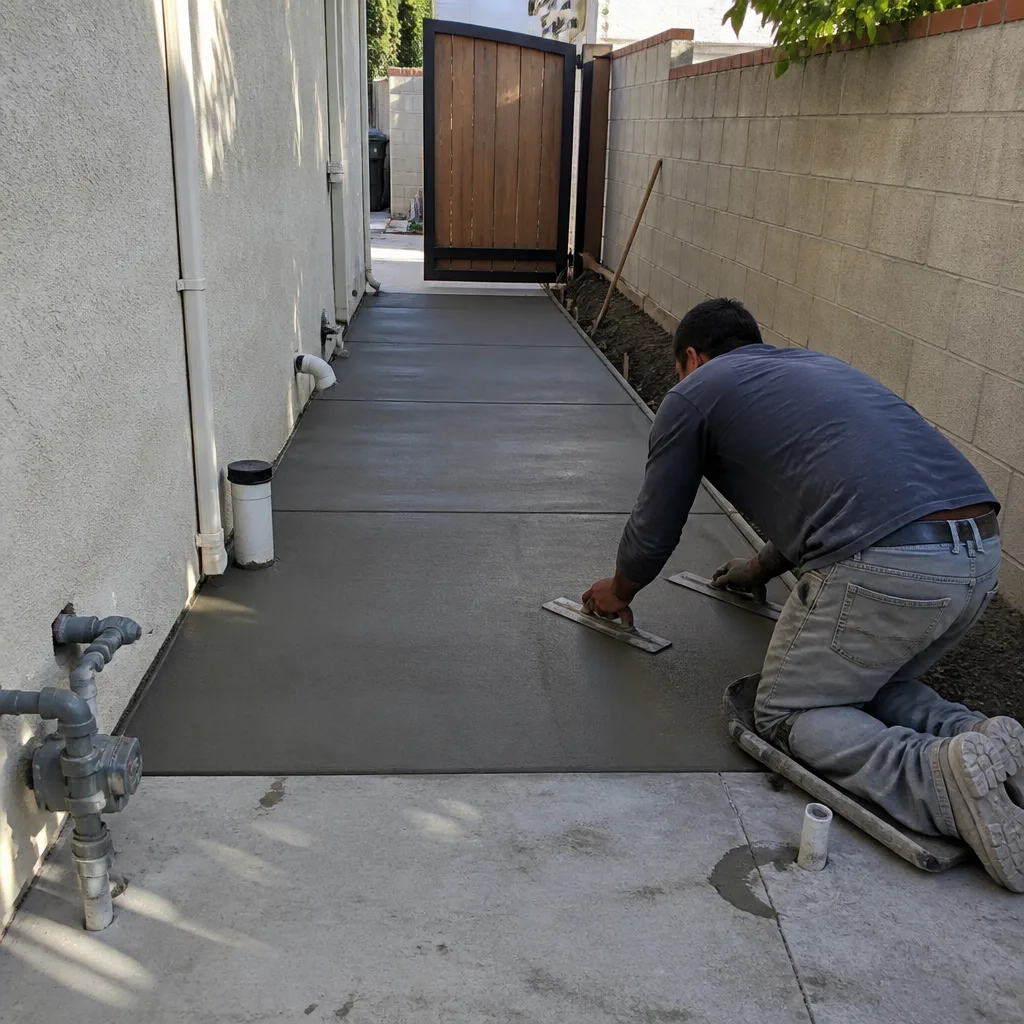
- Small ADU slab (400-600 sq ft, 4-inch slab with thickened edge): $4,800-$7,200 for Quikrete materials, rebar, vapor barrier, and form work. Labor included in these numbers.
- Full home addition foundation (800-1,400 sq ft, stem wall or slab-on-grade): $9,000-$18,000 for concrete, steel, excavation, and compaction.
- Garage conversion slab repair or overlay: $3,500-$8,500 depending on the condition of the original pour.
What drives the range? Access, first. A backyard ADU with a 30-foot carry from the truck to the form costs more than a garage with a driveway right to the pour. Soil conditions, second. Los Angeles’s native clay expands and contracts; if we need to remove 18 inches of it and bring in compacted fill, that’s machine time and hauling. Permit scope, third. When the project is a full addition or ADU, the city requires structural drawings, and that engineering cost lands in the total. Every quote Rowan Construction Group issues includes a line-item breakdown: materials, labor, equipment, permits, profit. You’ll see the Quikrete bag count and price per bag. Under Clause 1 of the Haven Standard, that written price is in your hands before anyone swings a shovel, and no work proceeds on a change until the change order is signed.
DIY or Call Us?
If you’re pouring a small pad, a walkway, or setting fence posts, Quikrete is genuinely DIY-able. The bags have instructions, the mixing is straightforward, and a $7 bag of fast-setting mix does what it says. But when we’re talking about a home addition or ADU in Los Angeles, the concrete is the smallest part of a larger structural system. You need a 5,000 PSI mix placed on compacted, tested subgrade, with a vapor barrier below, rebar tied to an engineer’s spec, and forms set to a surveyor’s line. If any one of those is wrong, the slab fails, the inspector fails it, or both.
And the safety reality: a cubic yard of concrete weighs about 4,000 pounds. You cannot hand-mix a foundation. A 20-bag Quikrete pour for an ADU footing is a two-person minimum with a mixer, and if the forms blow out mid-pour, someone gets hurt and the concrete is scrap. We send background-checked crews with the right equipment and a documented photo record of every step, from the empty form to the finished pour. If any of this sounds like more than you want to run a Saturday on, call (470) 298-9650. The estimate is free, and the price you get is the price you’ll pay. That’s the whole point.
FAQs
A properly poured Quikrete 5000 foundation with a vapor barrier and good drainage should last 50 to 80 years in Los Angeles’s climate. The concrete itself is not the limiting factor; what shortens the lifespan is water movement through expansive clay soil, undermines the slab edge, and causes the concrete to crack from differential movement. Fix the drainage and the slab stays put.
Hairline cracks can be sealed with epoxy injection and are usually cosmetic. Cracks wider than 1/8 inch with vertical offset indicate the slab is moving, and patching the concrete won’t stop that. The underlying soil or drainage issue has to be addressed first, and in some cases the affected section of slab comes out and gets re-poured.
For a typical ADU foundation in Los Angeles, you’re looking at 5 to 10 working days from excavation to a finished, stripped slab. That includes setting forms, tying rebar, the pour itself, and the 3 to 7 days of curing before framing can start on top.
We stock Quikrete Fast-Setting Concrete Mix and Quikrete Concrete Mix on our trucks for posts, pads, and small repairs. For large pours, we order Quikrete 5000 by the pallet from local Los Angeles suppliers two to three days ahead of the scheduled pour so the bags are fresh and the lot numbers match across the entire pour. Call (470) 298-9650 for an exact quote on your project - estimates are free.
Written by Grant Rowan, Owner, Rowan Construction Group at Rowan Construction Group, serving Los Angeles and nearby areas.