

Free written scope consultation - allowances, timeline, and change-order rules on paper before a single trade is scheduled
 Before
 After
After Before
 After
After Before
 After
AfterSilestone Construction in Los Angeles, CA | Rowan Construction Group
We’re Rowan Construction Group, an independent Silestone service provider working across Los Angeles. We install, repair, and replace Silestone quartz countertops, islands, and backsplashes throughout the city, from Koreatown to the San Fernando Valley. What makes our Silestone work different here is that we plan for how LA’s seismic activity, fire zones, and expansive clay soils actually affect quartz slabs. Call (470) 298-9650 for a written estimate, which we deliver before any work begins.
Why Los Angeles Residents Choose Us for Silestone Service
We’ve spent years watching how Silestone’s polyester resin binder responds to Los Angeles conditions that most installers never consider. That’s not manufacturer training. It’s hands-on independent work: our crews have pulled cracked slabs out of 1960s dingbat apartments after seismic retrofits, reinstalled counters in Bel Air outdoor kitchens where UV reflection off metal roofs caused micro-crazing, and re-supported long peninsula runs in Valley tract homes where the slab-on-grade foundation moved underneath them. We carry a documentable record of that work.
Grant Rowan, our owner, grew up in the Crenshaw district and trained in construction technology at Los Angeles Trade-Technical College, where he learned framing, concrete, and project estimating before he ever took a paying job. That background shapes how we approach Silestone installation: load paths, substrate movement, and thermal behavior come first. The slab color gets picked after those questions are answered. We also stock matched color kits and U.S.-made polyester adhesives locally with regional distributors, which means turnaround on seam repair and chip work in Los Angeles stays short. For the full range of what we offer, see our Silestone sales & service page.
Common Silestone Construction Problems We Solve in Los Angeles
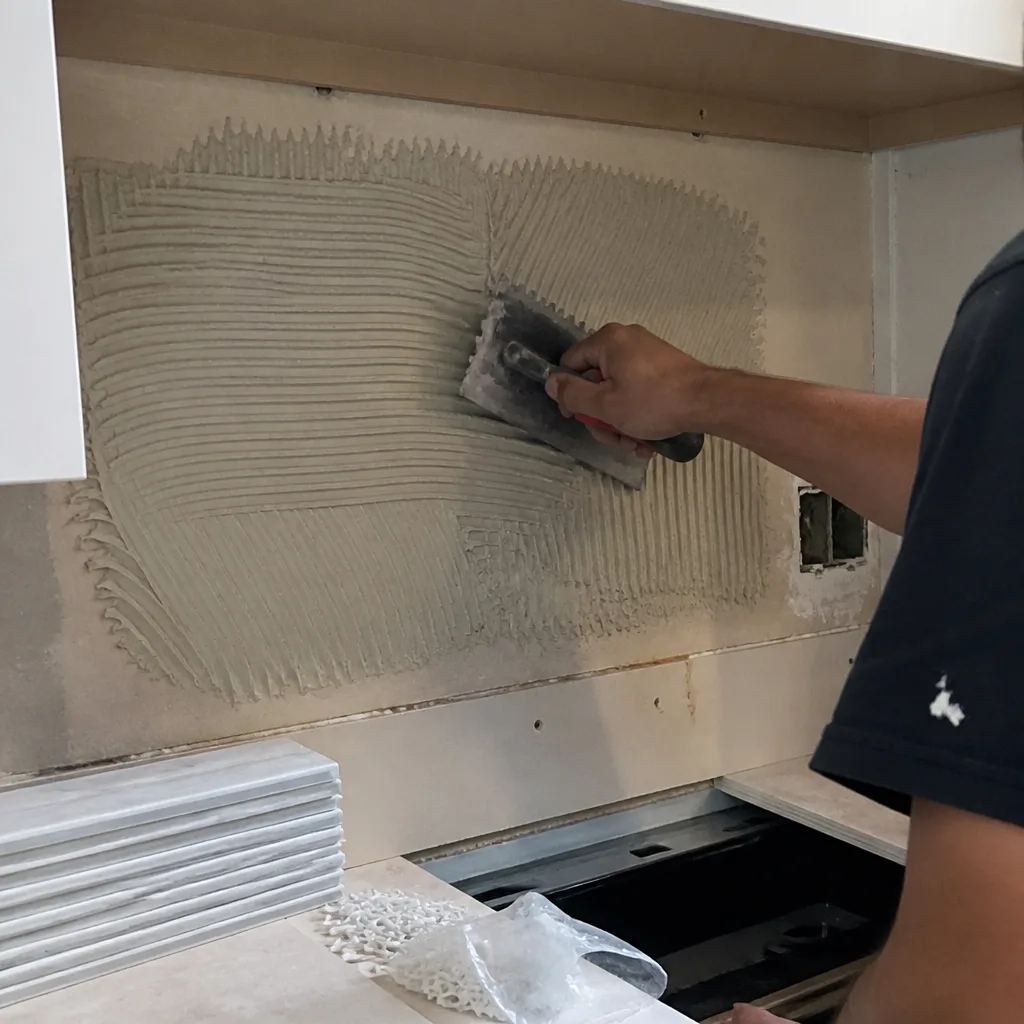
- Cracked slabs after soft-story retrofits. Pre-1980 apartment buildings with tuck-under parking are getting steel moment frames welded beneath them under LA’s retrofit ordinance. The jacking and leveling phase concentrates flexural stress at the weakest point in a Silestone counter: the sink cutout. We remove the slabs before the structural crew moves in, re-support the cabinets, and reinstall with a flexible adhesive bed.
- Butt joints opening on long peninsula runs in the Valley. Expansive clay under slab-on-grade tract homes in neighborhoods like Encino and Northridge shrinks during LA’s long dry season and heaves after winter rains. That seasonal movement opens Silestone seams 1-2 mm at the center of the run, where foundation deflection is greatest. We re-seam with adhesives engineered for quartz thermal expansion, but we’re straight with you when replacement is the smarter call.
- Micro-crazing on outdoor counters in hillside WUI zones. In Wildland-Urban Interface areas around Studio City and the Santa Monica Mountains, Silestone’s polyester resin can develop fine surface cracking from prolonged exposure to UV reflected off Class A metal roofs. Darker colors from the Pulsar series are most susceptible. We explain whether an outdoor Silestone installation makes sense for your specific exposure before you commit to a slab.
- White impact chips from retrofit tools. Silestone’s quartz hardness is a selling point until a structural crew drops a wrench on a dark Pulsar counter during a seismic retrofit. Those white impact marks are nearly impossible to blend well. We’ll show you what a repair looks like versus a replacement, with the numbers for each, before you decide.
- Weight load on original 1920s cabinetry. In Silver Lake and Hancock Park, original 1920s-40s wood-frame cabinets were never engineered for the weight of a 3cm Silestone slab. We inspect the cabinet framing and substrate before any installation and tell you plainly whether additional blocking or a 3/4-inch CDX underlayment is required.
BeforeAfterSilestone Service in Los Angeles: What Local Conditions Mean for Your Equipment
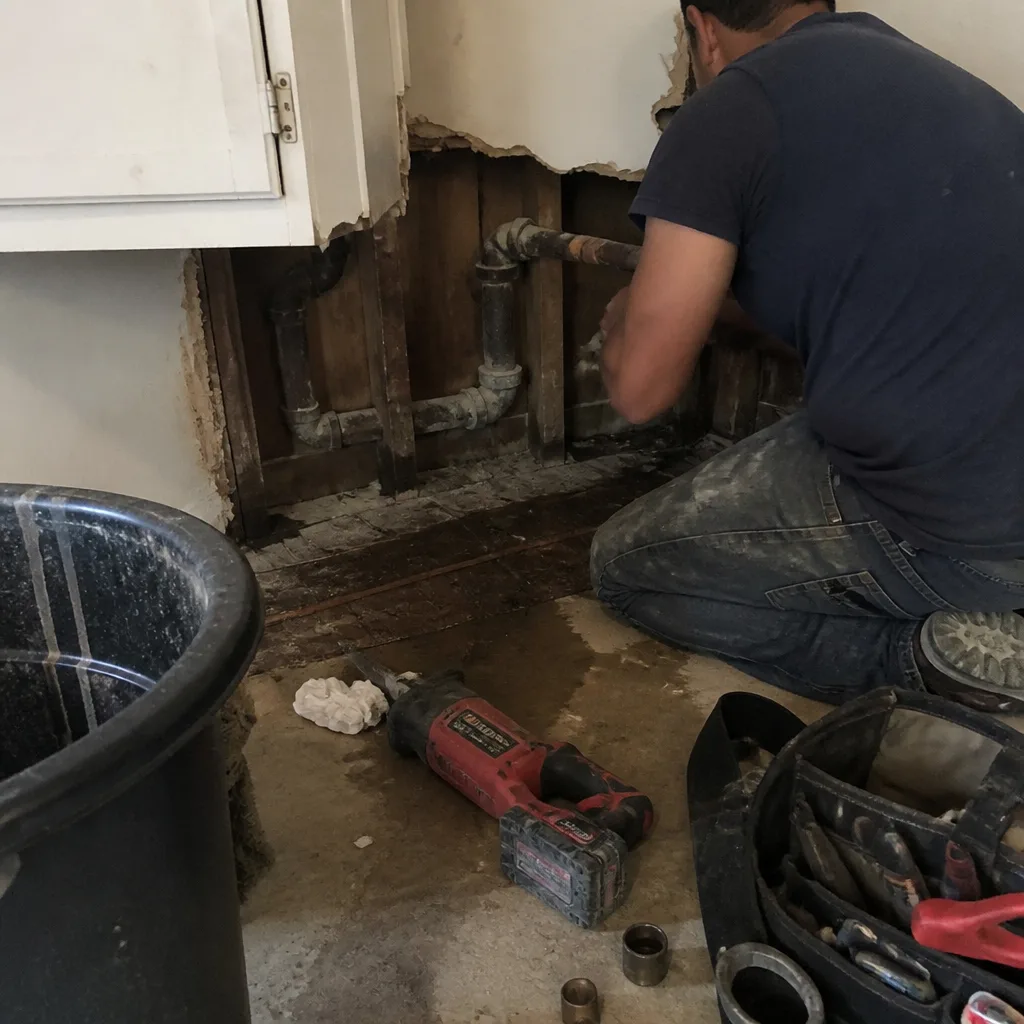
Los Angeles is the only major U.S. city with a mandatory soft-story retrofit ordinance, Ordinance 183893, which requires thousands of pre-1980 wood-frame apartment buildings over open parking to be seismically retrofitted on a city-enforced deadline. That ordinance creates a countertop problem you will not encounter in Pasadena or Santa Monica, because those cities lack this level of mandate. When steel moment frames go in directly beneath kitchens on original cabinets, Silestone tops crack during the jacking and leveling phase. Independent installers in Los Angeles regularly remove and re-support quartz counters mid-retrofit, and that work requires sequencing with the structural contractor’s schedule. We’ve done enough of these to know that the counter usually has to come out before the steel goes in, not after. Our crew handled a 1962 dingbat on Kenmore Avenue in Koreatown where the retrofit crew had already welded frames beneath the building. The owner’s Eternal Classic counters had hairline cracks radiating from the sink and along the back seam. We removed the slabs, epoxy-injected the cracks, added a 3/4-inch CDX underlayment tied to the new shear wall, and reinstalled with a flexible adhesive bed. Those counters have now survived two full seasonal shrink-heave cycles.
Silestone Models & Products We Service in Los Angeles
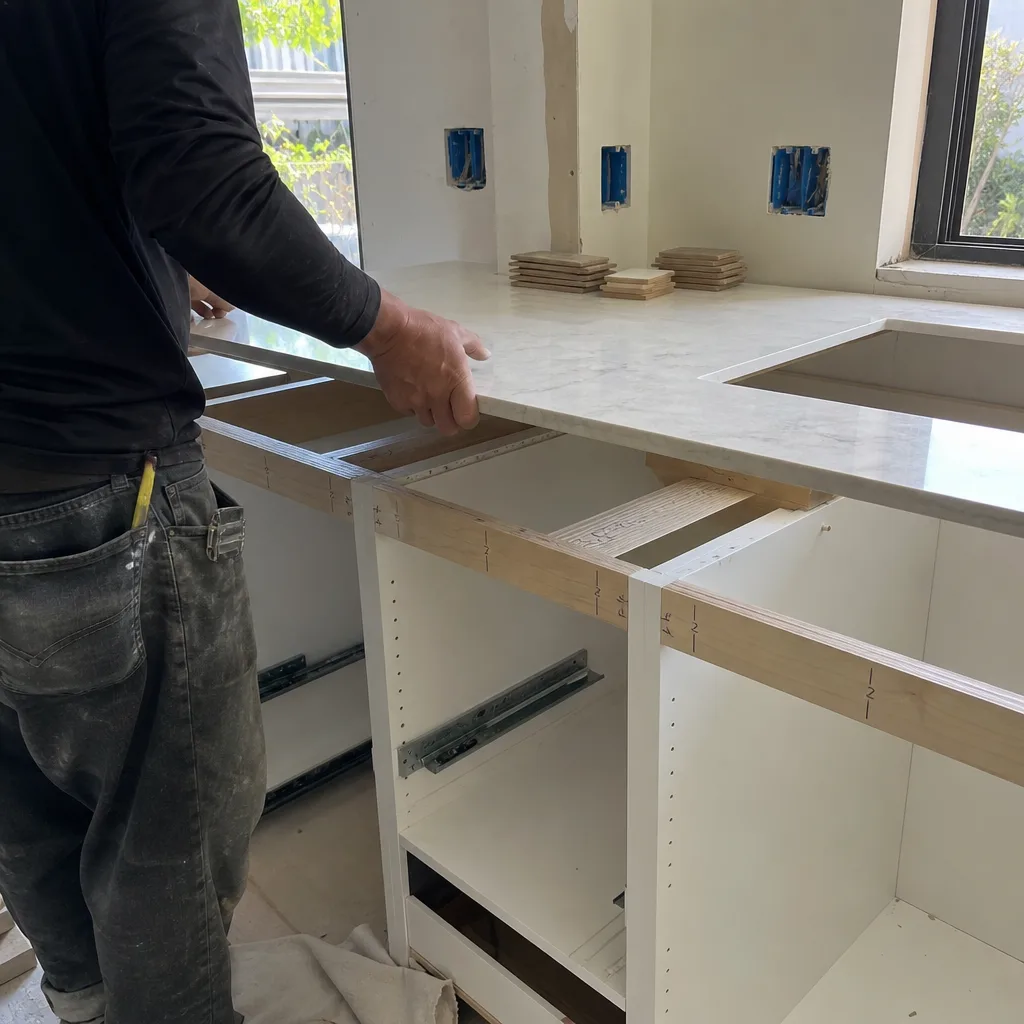
We work with Silestone’s full slab catalog, including the Eternal Classic Series, Loft Series, Le Chic Series, and Pulsar Series. For seam repair and chip work, we source genuine Silestone slabs and matched color kits through regional distributors so resin consistency stays identical to the original installation. We do not upcharge for OEM edge profiles, and we use U.S.-made polyester adhesives engineered for quartz’s thermal expansion range. Our Los Angeles supplier relationships mean common slab colors are typically available within days, not weeks, which matters when a cracked counter is holding up a kitchen you’re trying to use. When a slab has cracked over a moving LA foundation, we’ll tell you if a patch is a waste of your money and a replacement is the honest fix.
Silestone Service Pricing in Los Angeles
Here’s what Silestone work costs in Los Angeles, with our written pricing structure. We deliver a flat written price with a written scope before anyone picks up a tool. That’s Clause 1 of the Haven Standard, and it’s been how we’ve operated since 2007 across more than 4,000 projects.
| Service | Typical Los Angeles Range |
|---|---|
| Quartz & Granite Countertop Installation (Silestone) | $2,360-$7,670 |
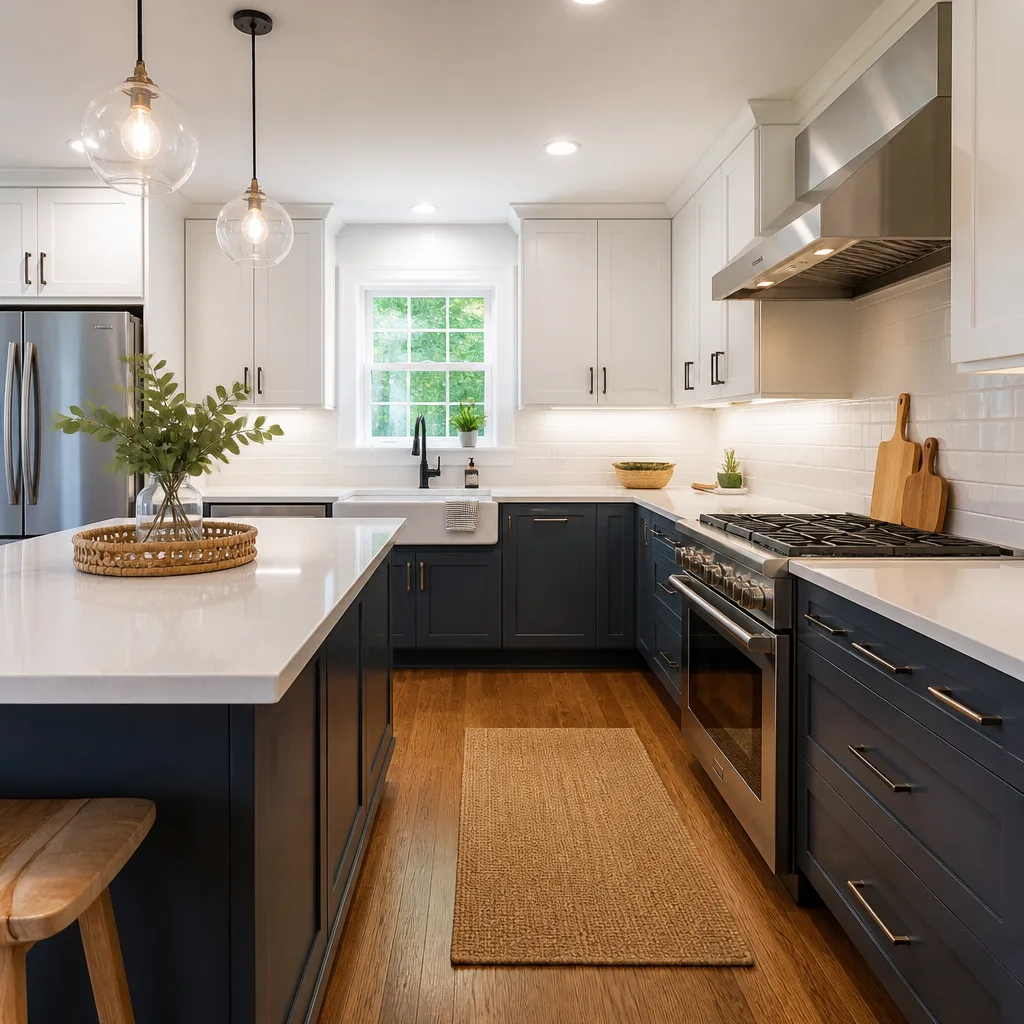
| Full Kitchen Remodel (including Silestone counters) | $16,520-$53,100 |
| Kitchen Island Installation with Silestone top | $3,540-$11,800 |
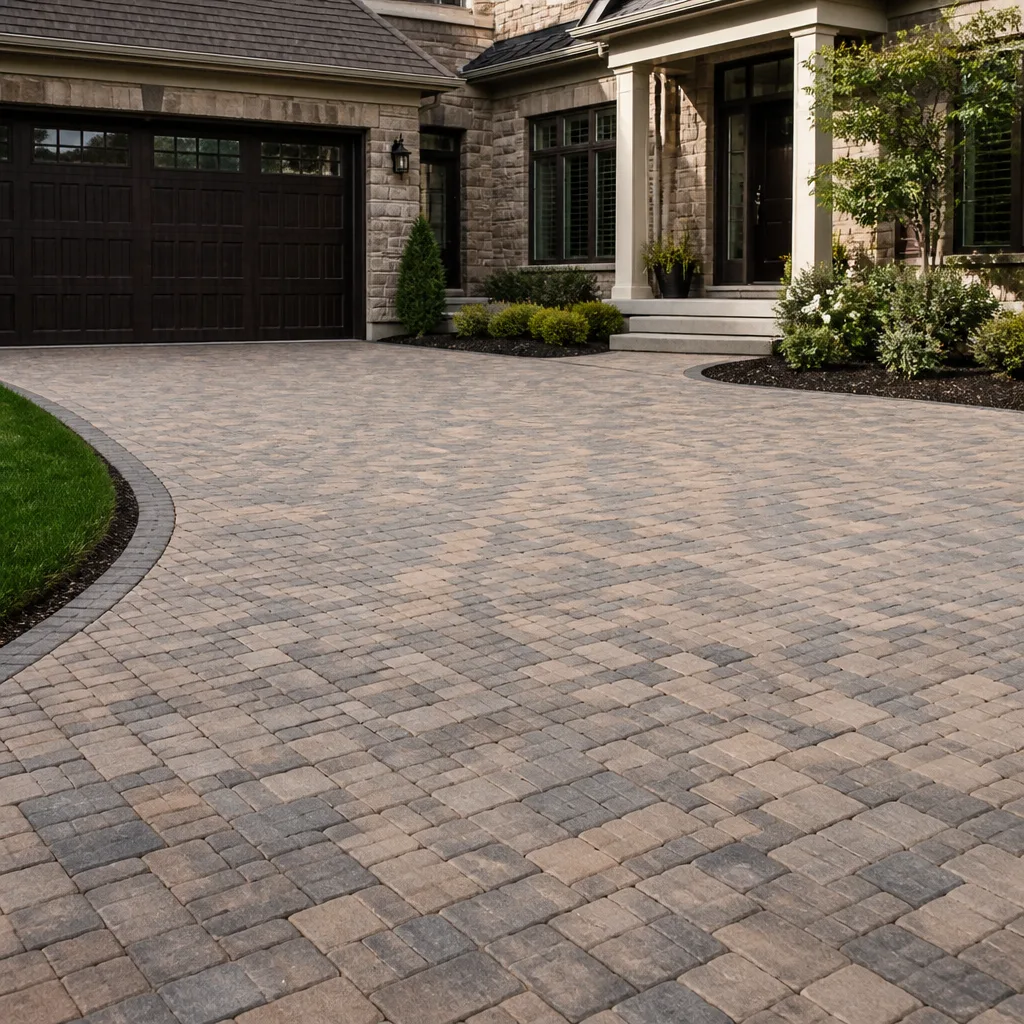
What drives the number: slab square footage, edge profile, whether existing cabinets need structural reinforcement, and whether your building sits in a WUI zone or on expansive clay that requires additional substrate work. A free estimate includes a written line-item quote, a documented photo record of what we found, and a written warranty. We also offer Driveway & Pavers in Los Angeles with the same transparent pricing. Call (470) 298-9650 for an exact quote for your Los Angeles kitchen.
Serving Los Angeles, CA - Our Local Coverage Area
We’re based in the Los Angeles area and know this community well. Use the map below to see our service coverage - if you’re nearby, we can almost certainly help.
FAQs - Silestone Construction in Los Angeles
My Silver Lake bungalow has a 1920s cripple-wall foundation. Can Silestone counters be installed without cracking when the house shifts? Yes, with the right substrate preparation. Cripple-wall foundations move seasonally, so we add structural blocking and, where needed, a 3/4-inch CDX underlayment to distribute load and reduce deflection under the slab. A flexible adhesive bed gives the counter room to move without cracking. The condition of your existing cripple wall matters more than the counter material, so we inspect the framing before quoting. Call (470) 298-9650 for a free evaluation.
Does the soft-story retrofit law affect my Los Angeles apartment building’s Silestone kitchen counters? Yes, directly. Ordinance 183893 requires retrofit work on thousands of pre-1980 buildings, and the jacking and steel installation phase frequently cracks counters on original cabinets. The counter typically needs to be removed and re-supported before structural work starts, then reinstalled after the building settles. We coordinate this sequence with your structural contractor and give you a written price before work begins.
I’m building an ADU in a Wildland-Urban Interface zone in the San Fernando Valley. Is Silestone fire-rated for outdoor kitchen counters? Silestone is not a fire-rated material in the sense of Class A roofing assemblies, and no quartz countertop is. In WUI zones, the bigger issue is UV exposure: Silestone’s polyester resin binder can develop micro-crazing from reflected UV off metal roofs and ember-resistant surfaces. For outdoor kitchens in Studio City or the Verdugo Hills, we walk you through the material behavior honestly, including whether Silestone or an alternative surface makes more sense for your exposure and your budget.
My Hancock Park Spanish Revival home has original 1930s plaster walls. Will Silestone’s weight require additional cabinet framing? Usually yes. A 3cm Silestone slab weighs roughly 18-20 pounds per square foot, and 1930s cabinet frameworks were not designed for that load plus the daily use a modern kitchen sees. We inspect the cabinet boxes, face frames, and the wall connection behind them before installation. If blocking or reinforcement is needed, it becomes a written line item in your quote, not a surprise after demo day. Call (470) 298-9650 for a free estimate on your specific kitchen.
Why do Silestone seams open up in my Valley home during summer and close in winter? Expansive clay soil under your slab-on-grade foundation shrinks during Los Angeles’s long dry season and heaves after winter rain. That movement deflects the slab and pulls Silestone butt joints apart at the center of long peninsula runs, typically 1-2 mm. We re-seam with polyester adhesives formulated for quartz’s thermal expansion, but if the movement is significant, we’ll recommend an underlayment or isolation strategy instead of repeated patching. Call (470) 298-9650 for a site inspection.
Service Areas Near Los Angeles
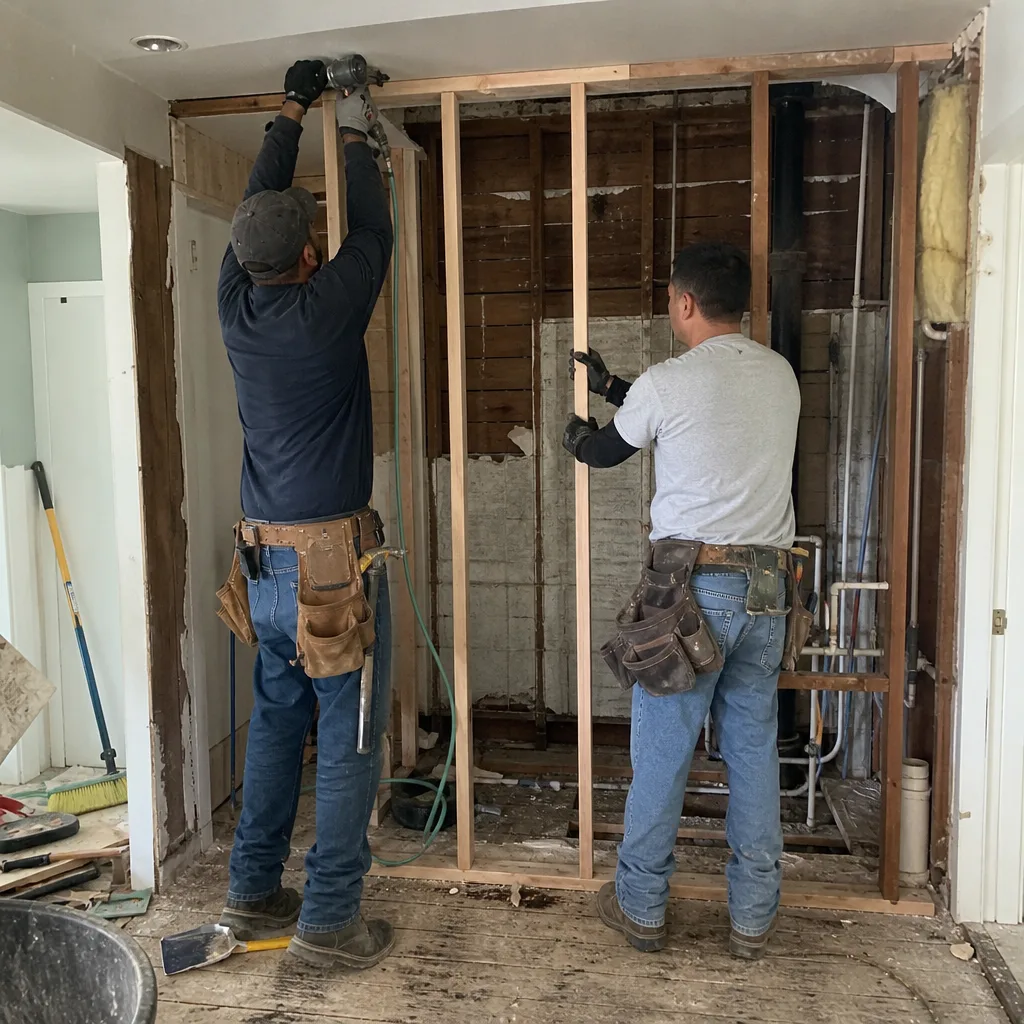
Our Silestone crews serve the neighborhoods and cities around Los Angeles County, including Koreatown, Silver Lake, Hancock Park, Studio City, and the San Fernando Valley. For readers in other markets, see Los Angeles service area details, Silestone service in Houston, and Silestone service in San Antonio.
Book Your Silestone Service in Los Angeles Today
We’ll inspect your Silestone counters, slab condition, and substrate in person, then give you a written flat price with a written scope. We’re an independent provider, so the number on paper comes from actual Los Angeles conditions, not a manufacturer’s retail list. Call (470) 298-9650 to schedule your free estimate.
Written by Grant Rowan, Owner at Rowan Construction Group, serving Los Angeles since 2007.