
Free written scope consultation - allowances, timeline, and change-order rules on paper before a single trade is scheduled
 Before
 After
After Before
 After
After Before
 After
AfterViewLux Roofing: The Los Angeles Owner’s Guide
If you’re holding a failed ViewLux roofing component, here’s the short version: Rowan Construction Group stocks ViewLux-compatible flashing, fasteners, vent boots, and ridge caps across our Los Angeles service area, and we install them for $710-$2,950 depending on the component and roof access. We’re not affiliated with ViewLux, but we’ve worked on their systems long enough to know exactly what fails first and how to match the part without guesswork. Most owners discover the problem the same way: a ceiling stain shows up after a Santa Ana wind event, or a neighbor points out a lifted shingle from the sidewalk. By the time you’re searching for the part by name, you’ve usually got water moving somewhere it shouldn’t be.
The good news: ViewLux roofing, when it fails, tends to fail at predictable points. The bad news: those points are often small enough to miss until the damage is already inside the wall cavity. A failed pipe boot or a corroded roof-to-wall flashing can drip for two or three Los Angeles rain seasons before anyone notices. This page is written for the owner who wants the part identified, priced, and installed without three rounds of phone tag or a quote that changes once the crew arrives.
Which ViewLux Models This Applies To
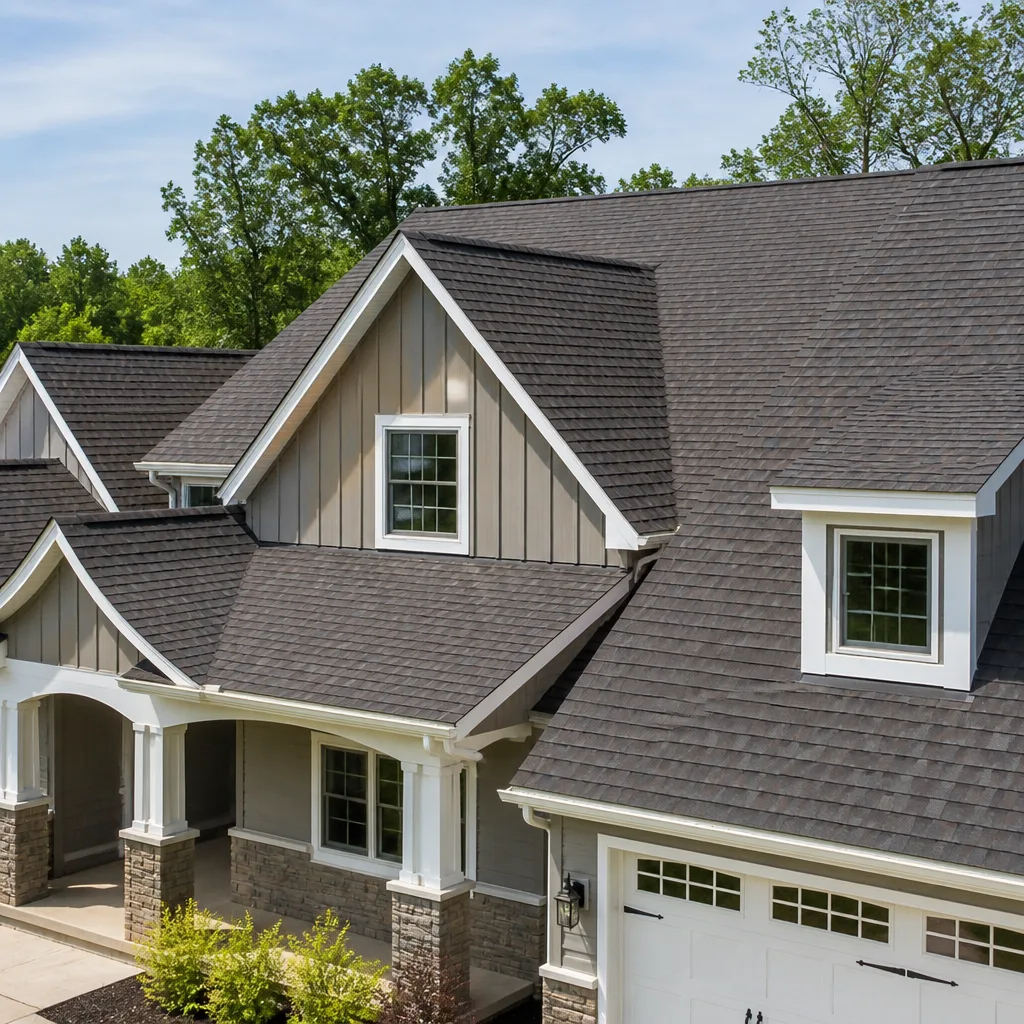
ViewLux produces asphalt shingle systems and lightweight tile profiles under a few series names, and the parts we match break down into two compatibility buckets. The most common ViewLux shingle lines in Los Angeles use standard architectural-shingle dimensions: a 5-5/8 inch exposure, a 13-1/4 inch width, and a 36-3/8 inch length per shingle. If the shingle on your roof measures roughly 13 inches across with a 5-5/8 inch reveal, it’s the standard module and most aftermarket flashing, ridge cap, and vent parts will seat correctly. The lightweight tile profiles are a different story: those use a narrower 12-inch module and require ViewLux-specific underlayment details at the eave and rake edges. Mixing the two module sizes on a repair is a classic compatibility gotcha that causes a visible step in the roof plane.
How to identify your part: lift the failed component and look for the stamped code on the underside. ViewLux stamps a two-letter series code plus a four-digit date code on their flashing and vent parts. If the stamp is illegible, photograph the part in place and text it to us at (470) 298-9650 before you pull anything off the roof. For the OEM-versus-aftermarket decision: ViewLux’s OEM flashing components are well-made but priced at a premium, and we stock genuine equivalents from GAF and Owens Corning that match the ViewLux profile within an eighth of an inch. On most repair work, the aftermarket part performs identically and drops the line item by 15 to 20 percent. We put both numbers in the written quote and you decide.
Signs Your ViewLux Roofing Is Failing
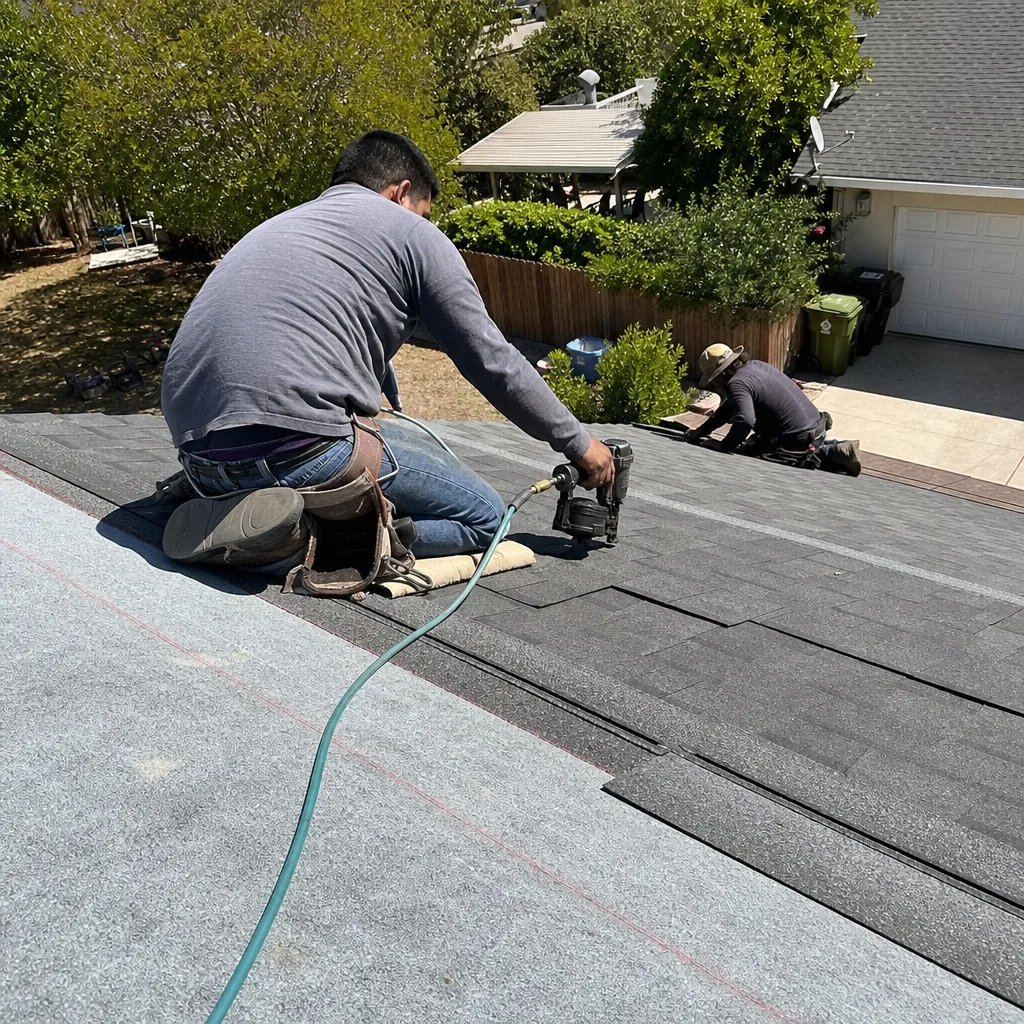
- Ceiling stain that darkens after rain. Water is passing through a breach, usually at a penetration (pipe boot, vent, valley) or a failed underlayment seam. The stain is the downstream symptom; the failure point is often six to ten feet uphill from where the stain appears.
- Lifted or curled shingle edges along the south and west exposures. In Los Angeles, those exposures take the worst of the UV load. Adhesive strips fail first on the windward edges, and once a shingle lifts, wind-driven rain gets under it.
- Granules collecting in gutters or at downspout elbows. This tells you the shingle surface is shedding. A modest amount is normal in year one; a steady accumulation after year six on a Los Angeles roof signals accelerated wear from heat cycles.
- Corroded or cracked flashing at roof-to-wall junctions. Southern California’s dry-then-rain cycle subjects 28-gauge flashing to repeated expansion and contraction, which opens hairline cracks at the bend points. Those cracks are invisible from the ground and precise enough to let water through.
- Daylight visible through the ridge cap from inside the attic. If you can see light, the seal is gone and wind-driven rain will follow. Ridge cap on ViewLux installations tends to fail at the overlap joints first, not the center.
BeforeAfterReplacement Cost & What’s Included
In Los Angeles, ViewLux roofing part replacement runs $710-$2,950 installed, with most single-component repairs landing between $945 and $1,890. The range exists for two reasons: roof access (a two-story steep slope costs more in both time and safety equipment) and the size of the repair footprint. Here’s the line-item breakdown for the most common jobs:
- Pipe boot replacement: $710-$1,180 installed. Includes cutting and refitting the boot, new sealant at the joint, and clean-up of the service area.
- Flashing replacement (roof-to-wall, chimney, or valley): $945-$2,125 installed. Price depends on the length of the run and whether the counter-flashing can be reused.
- Ridge cap replacement: $1,180-$2,950 installed. Full ridge runs cost more; individual cap tiles are usually at the low end of the range.
Every one of those prices is a flat, written quote before we start. The quote includes the part, the labor, the haul-away, and a written workmanship warranty. It does not include surprise change orders: if we find additional failure behind the part, we document it with photos, write a change order, and wait for your signature before proceeding. That’s Clause 1 of the Haven Standard, and it’s the reason our project totals stay within a few percent of the price you agreed to.
DIY or Call Us?
There’s one honest warning up front: working on a roof in Los Angeles means working at height, on a surface that may be hot, dusty, or wind-slick. A fall off a two-story roof is a broken hip or worse, and the Cost of a hospital bill in this county runs five to ten times what a year of roofing repairs would. We don’t give step-by-step instructions on our website for any repair that requires walking the roof surface, working near the edge, or handling flashing at the eave line. If the part is within arm’s reach of a ladder and you’re confident on the ladder, you can photograph it, measure it, and document it for us. The repair itself is better left to someone whose crew is background-checked, uniformed, and carrying proper fall protection.
What you can safely do: clear the gutters, check the attic for daylight, photograph any visible cracking or lifting, and send us the photos. We’ll tell you whether the part needs replacement or whether it can ride another season. That phone call costs you nothing, and we answer it with a live person, not a recording. Call (470) 298-9650 and describe what you’re seeing. We’ll take it from there.
FAQs
ViewLux architectural shingles typically last 18 to 22 years in the Los Angeles climate, with the south and west exposures degrading first due to UV load. Lightweight tile profiles run closer to 25 to 30 years. The failure point is usually the adhesive strip on shingles or the underlayment on tile profiles, not the material itself. Call (470) 298-9650 and we’ll tell you honestly whether your roof has another five years or whether you’re band-aiding a system that’s reached the end.
Some things patch cleanly: a small flashing crack can be sealed, a loose shingle can be re-adhered if the underlying mat is still intact. What we won’t patch is rusted-through flashing, cracked pipe boots, or a ridge cap with more than isolated joint failure. Those parts are compromised, and patching them just buys a few months of wet-weather anxiety. The quote we give you always includes both the repair option and the replacement option, side by side, in writing.
A single pipe boot or flashing replacement runs two to four hours on-site. A full ridge cap replacement runs a day. If we need to re-tile part of a slope, plan on two days. We’ll give you the timeline in the written quote, and every visit includes a documented photo record of what was found and what was done before the crew leaves.
We stock the common replacement parts on every roofing truck: standard 4-inch and 5-inch pipe boots, 28-gauge step flashing, valley flashing, ridge cap shingles, and sealants rated for the Los Angeles sun load. If you have a less common part, we order it and schedule the install within the week. We also stock parts for KraftMaid, Cambria, and Silestone installations for our other trade work, so if you’re dealing with multiple systems, one crew can address them.
Not without your written signature. Under Clause 1 of the Haven Standard, the price is written before anyone starts, and no change proceeds without a signed change order. If we open up the repair and find additional damage behind the part, we stop, document it with photos, and present you with a written change order for the extra scope. You approve it or you don’t. The original quote stands either way. That discipline is why our projects finish within a few percent of the number the customer agreed to.
Written by Grant Rowan, Owner, Rowan Construction Group at Rowan Construction Group, serving Los Angeles and nearby areas.